

TL;DR
Check Safari’s Bookmarks sidebar and Favorites bar before attempting recovery.
- Copy any bookmarks that are still visible before changing sync settings.
- Use an archive restore only after preserving the current copy.
- Avoid changing iCloud sync as a first troubleshooting step.
You open Safari and the row of saved websites is gone, or a folder you need looks empty. A hidden Favorites bar, a different profile’s Favorites folder, and deleted bookmarks need different fixes. Start with the checks below and preserve the bookmarks that are still available before attempting a restore.
Menu references were checked against Apple’s public Safari and iCloud guides in October 2026. The steps below use the macOS 27 guide, with older export steps labeled for macOS Sonoma 14.
Safari profiles require Safari 17 or later. Older screenshots remain beside matching steps as visual references, not as examples of the current interface.
1. Check whether Safari bookmarks are hidden
An empty Favorites bar doesn’t establish that your bookmarks were deleted. The sidebar shows your saved folders, while the bar shows the Favorites folder used by that window.
- In Safari, choose Bookmarks > Show Bookmarks. You can also open the sidebar with its toolbar button and select Bookmarks.
- Expand your bookmark folders and look for the missing website. Use the sidebar’s search field to search for its name.
- Choose View > Show Favorites Bar if the bar is hidden. If the menu offers Hide Favorites Bar, the bar is already enabled.
These controls are documented in Apple’s bookmark guide and window customization guide for macOS 27. If you find the websites in the sidebar, you can open them there without restoring an older collection.

Check the profile’s Favorites folder
In Safari 17 and later, bookmarks are available to all profiles through the Bookmarks menu or sidebar.
Each profile can use a different Favorites folder, so switching profiles can change what appears in the bar.
- Use the profile button in the toolbar, or choose File > New [Profile] Window, to open the profile you normally use.
- Open Safari > Settings > Profiles, select that profile, and check its Favorites folder selection. Compare it with the folder containing your saved websites.
- Keep using the matching profile or select the intended Favorites folder. Don’t delete a profile to repair a missing bar.
Private browsing windows use the default profile’s Favorites bar. If your usual favorites appear in a normal profile window, you don’t need a bookmark restore.
2. Save the bookmarks you still have
Before you change iCloud settings, import an old file, or restore bookmarks, export what you can still see. If another Mac has the fuller collection, save a copy there too.
Keep each copy separately so a later restore doesn’t become your only copy.
Newer Safari export
- Choose File > Export Browsing Data to File.
- Select Bookmarks and leave unrelated categories, especially passwords and credit cards, unselected.
- Complete the export and save prompts. Store the result somewhere private that you can find again.
The macOS 27 export guide documents a ZIP file, rather than a standalone HTML file. Bookmarks are shared across profiles. Exported browsing data isn’t encrypted, so don’t upload the archive to a public troubleshooting forum.
Older Safari HTML export
In the macOS Sonoma 14 guide, choose File > Export > Bookmarks to save Safari Bookmarks.html. Use this path when your Safari menu offers it.
An export saves the bookmarks currently available to Safari, so it won’t by itself bring back an already missing folder.
Also keep a current Mac backup before file recovery. Our Mac backup guide covers the broader backup task. A new backup protects today’s state, but you’ll need an older copy if the bookmarks disappeared earlier.
3. Separate an iCloud sync problem from deletion
If your iPhone, iPad, or another Mac still shows the bookmarks, keep that copy safe before changing anything. A difference between devices calls for an account and sync check before you restore an older archive.
- Check that each device uses the same Apple Account for iCloud. On the Mac, open Apple menu > System Settings > your name > iCloud.
- On macOS Sequoia 15 and later, look beside Saved to iCloud, choose See All, and check Safari. On macOS 13.3 through Sonoma 14, look below Apps Using iCloud for Show All or Show More Apps.
- On iPhone or iPad, open Settings > your name > iCloud > See All (or Show All) and check Safari.
- If Safari was off, preserve any local bookmarks before enabling it. Read any merge or data-retention prompt before accepting a change. If Safari is already on, leave it on while you check the account and connection.
Apple’s iCloud setup guide explains that a device needs the same Apple Account and Safari enabled to access Safari data stored in iCloud.
An off switch or a different account doesn’t, by itself, show that the bookmarks were deleted.
Make sure the affected device can load a webpage, then allow time for syncing and check the sidebar again.
Don’t repeatedly turn Safari sync off and on, sign out of iCloud, or accept a prompt that deletes local data as a shortcut. You may still have bookmarks that haven’t synced.
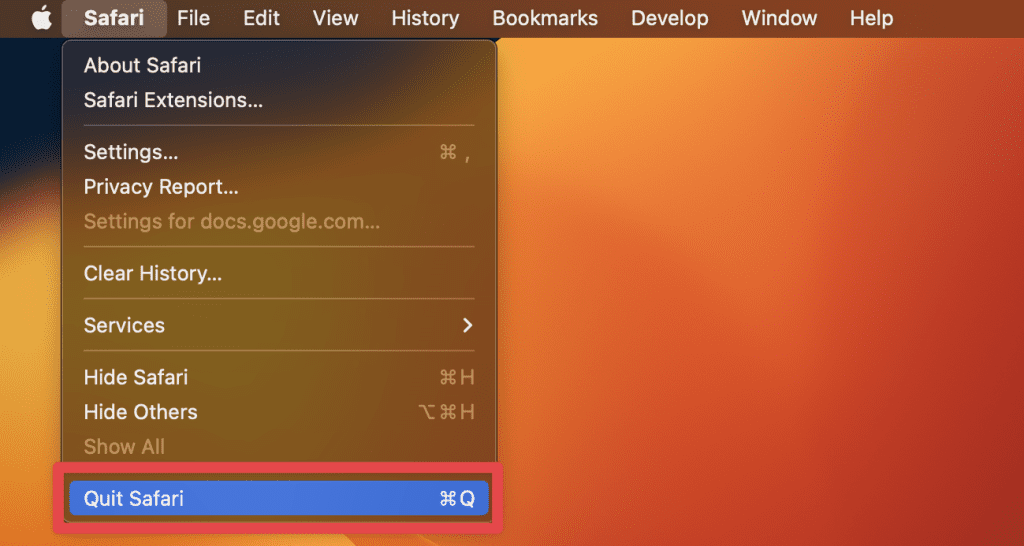
If Safari’s display seems stuck after those checks, choose Safari > Quit Safari, then reopen it and check again. Reopening is a display check, not a way to recover deleted bookmarks.
4. Recover deleted Safari bookmarks with iCloud
Use iCloud recovery when bookmarks are missing from the saved collection, rather than just from the bar. You’ll need the Apple Account that held the bookmarks and an available recovery item or archive.
Save your current bookmarks first.
Before a version restore, check the date carefully. Restoring an earlier bookmark version first archives the current version in iCloud. The restored version appears on every device with Safari enabled in iCloud.
Newer bookmarks may be absent from the older collection, which is why your separate export matters. See Apple’s bookmark restore guide.
- On a computer or tablet, open iCloud.com/recovery and sign in to the correct Apple Account. On the iCloud homepage, look for Data Recovery or Recovery.
- Select Restore Bookmarks and inspect the available choices before selecting Restore.
- If the page offers individual bookmark checkboxes, select the missing bookmarks you want to recover. If it offers archived versions, choose a version from before the loss, after checking the consequences above.
- Follow the confirmation prompts and wait for restoration to finish. Don’t add, move, or delete bookmarks during a version restore because those changes won’t be saved.
- After completion, check the Bookmarks sidebar and the other synced devices. Export the recovered collection once you’ve confirmed the bookmarks you need are present.
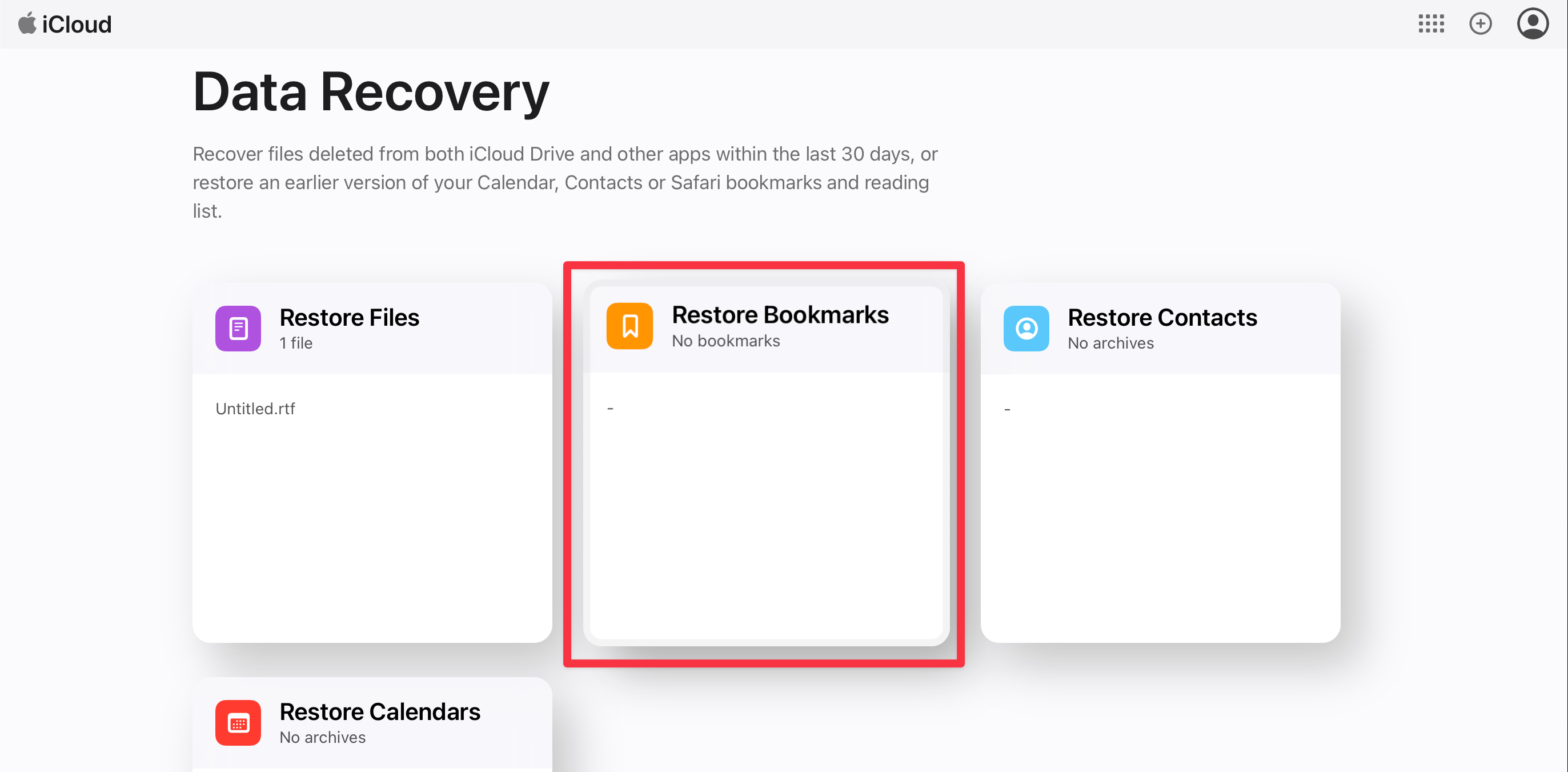
Apple’s deleted iCloud data instructions describe selecting individual bookmarks, while its iCloud guide describes archived versions. Follow the choices on your screen.
Don’t assume that selecting an entire dated version will recover only one missing website.
If the restored version isn’t the one you needed, the version-based process lets you return to the collection archived immediately before restoration.
Check the available versions rather than assuming that the newest entry contains your missing bookmarks. If no suitable item or archive appears, stop before trying file replacements.
5. Use an existing export or backup carefully
An older bookmark export is useful when it predates the loss. Preserve your current collection before importing, then check the imported folders before removing any duplicate Safari bookmarks.
For the older HTML-file workflow in Safari on macOS Sonoma, choose File > Import From > Bookmarks HTML File and select your saved HTML file.
Imported bookmarks appear in a new dated Imported folder in the sidebar. If your Safari version has different import controls, use its matching Help instructions rather than renaming a ZIP export to HTML.
If you have only a Time Machine backup, keep it intact and ask Apple Support for help with Safari recovery for your macOS version and iCloud setup.
Don’t overwrite the live Bookmarks.plist file or replace the Safari Library folder from a generic tutorial. That can replace newer data and leaves the effect on your synced collection unclear.
If you have no suitable export, backup, or iCloud recovery item, recovery isn’t assured. History can help you find a website to bookmark again, but Recently Closed reopens tabs and windows.
It doesn’t restore your saved bookmark folders. Cache cleaning and Terminal commands aren’t substitutes for a recoverable copy.
Frequently Asked Questions
Will restoring bookmarks also restore my open Safari tabs?
Bookmark recovery restores saved website links.
Open tabs and Tab Groups are separate Safari data, so don’t treat a bookmark restore as a tab recovery method.
Apple’s Safari iCloud guide distinguishes bookmarks, Reading List, Tab Groups, and open tabs.
Can I get bookmarks back from Safari history?
History can help you find a visited website and bookmark it again, but it won’t recreate the original folder structure.
Once you find the page, use Safari’s Add Bookmark control and choose the folder where you want to save it.
Does deleting a Safari profile delete its bookmarks?
Deleting a Safari profile keeps its favorites and other bookmarks, but deletes the profile’s history, cookies, and other website data.
Don’t delete a profile as a recovery step. Apple’s profile guide explains these separate effects.
Can I recover bookmarks that were never stored in iCloud?
iCloud recovery needs a recoverable copy in that account.
For bookmarks that existed only on a Mac, look for an earlier HTML export or a backup from that Mac.
Turning on iCloud now doesn’t establish that it holds an older copy of your missing bookmarks.
Should I import my bookmark backup more than once?
Import your backup once, then check the result before importing again. The older HTML import workflow puts imported bookmarks in a dated Imported folder.
Keep the original backup file while you check for missing websites and duplicates.
Why does my renamed Safari profile still have the old Favorites folder?
Renaming a profile leaves its existing Favorites folder in use. For example, a renamed Research profile can still use its Research folder.
Check the folder selection before moving bookmarks. Safari’s profile instructions explain how profile names and Favorites folders relate.
Affiliate disclosure: MacBook Journal may earn a commission when you buy through links on this page, at no extra cost to you.
How helpful was this article?
Your feedback helps us improve our guides.