

TL;DR
Use Screenshot controls for screen video, or Photo Booth or QuickTime for a camera recording.
- Shift-Command-5 offers full-screen or selected-area recording; newer macOS adds window capture.
- Choose a microphone, and use system-audio capture only where the macOS version offers it.
- Stop from the menu bar or the stated keyboard shortcut.
The written steps follow Apple’s recording documentation. Retained screenshots show earlier interfaces; use the version labels beside each method.
A screen recording captures the display; a camera recording captures you or the room. Use the built-in Screenshot toolbar for the screen, or QuickTime Player and Photo Booth for an available camera. Controls vary by macOS and app version.
How to Record a Video on Your Mac
How We Check Our Guides We use Apple’s support documents and current developer instructions to check the steps. Screenshots and menu names can differ between versions, so follow the branch for your Mac. Read our editorial process.
Here are five recording routes: Screenshot and QuickTime for screen capture, Photo Booth and iMovie for camera capture, and CleanShot X for screen recordings with additional capture and editing tools.
1. With Hotkeys
Here’s how you can use keyboard shortcuts for video recording on Mac:
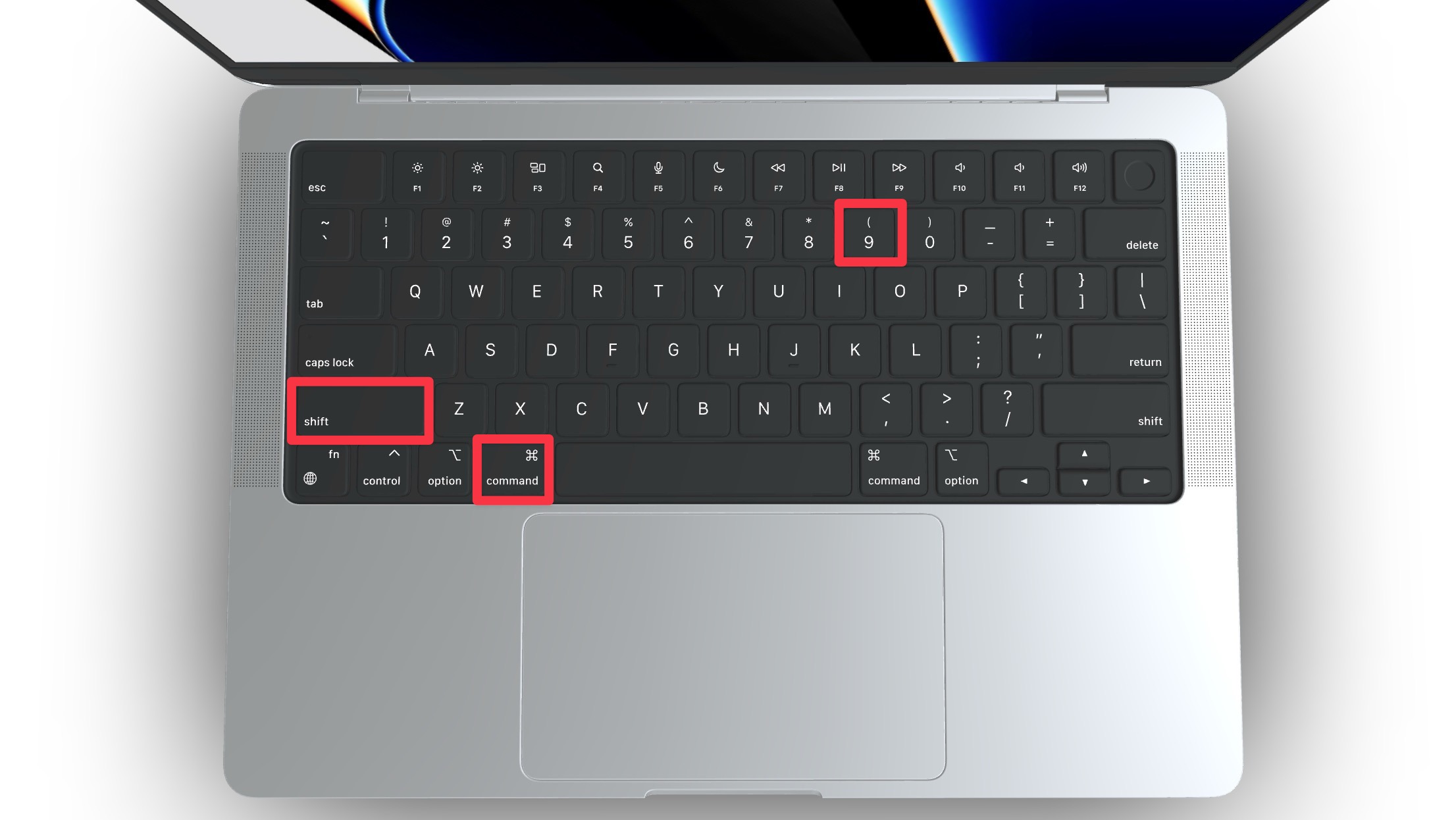
Press Shift-Command-5 on macOS Mojave 10.14 or later. The screenshots below show an earlier toolbar.
- Press Command ⌘ + Shift ⇧ + 5 to bring up the screenshot toolbar.
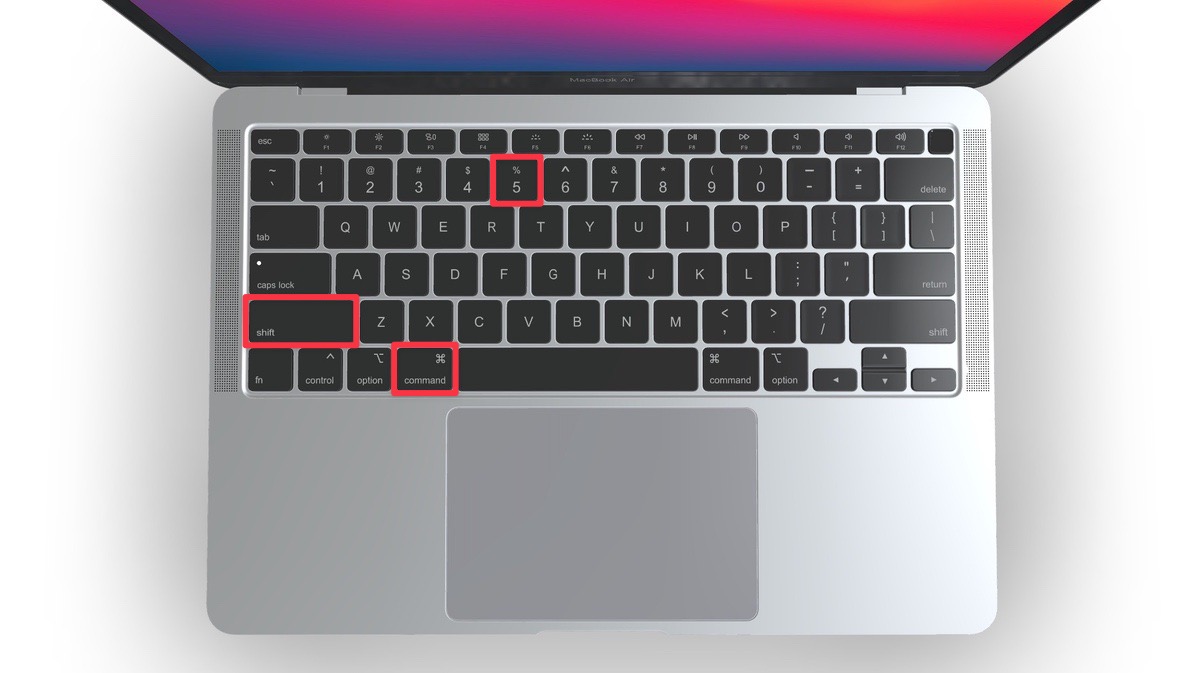
- The Screenshot toolbar has separate controls for still captures and video recordings. Select a recording control. Record Selected Window is available on macOS Tahoe 26 or later.
- Choose Record Entire Screen or Record Selected Portion. On Tahoe 26 or later, you can also choose Record Selected Window. For a portion, drag to select the area.

- Before recording, open Options. Choose a microphone for voice, or on macOS 27 Golden Gate or later choose Include System Audio separately for the Mac’s sound. Choose Save to for the destination, then click Record. Apple’s current screen-recording guide covers these options and the Tahoe 26 selected-window control.
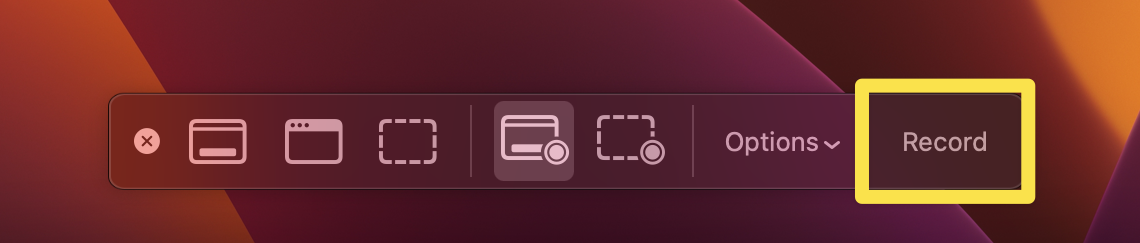
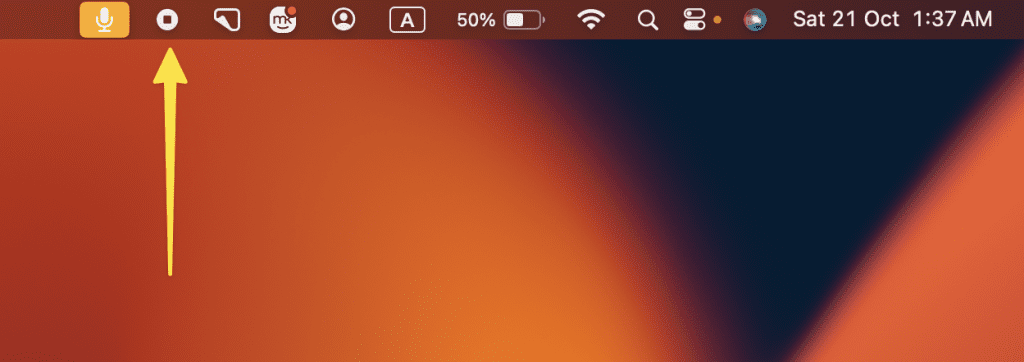
- Click the Stop button in the menu bar, or press Command ⌘ + Control + Escape.
- In Options > Save to, choose where future recordings will go; Desktop is the default in Apple’s current guide. The floating thumbnail is for opening or editing the clip, not a required save step. The screenshot below shows an older thumbnail menu.

2. Via QuickTime Player
QuickTime Player can start a screen recording or record from a camera. The screen-recording steps below use Screenshot on current macOS; a separate camera method follows.
Apple’s screen-recording guide explains the Screenshot and older QuickTime workflows.
- Open QuickTime Player from Finder > Applications, or search for it with Spotlight.

- Choose File > New Screen Recording. If Screenshot opens, use its recording controls as described above.
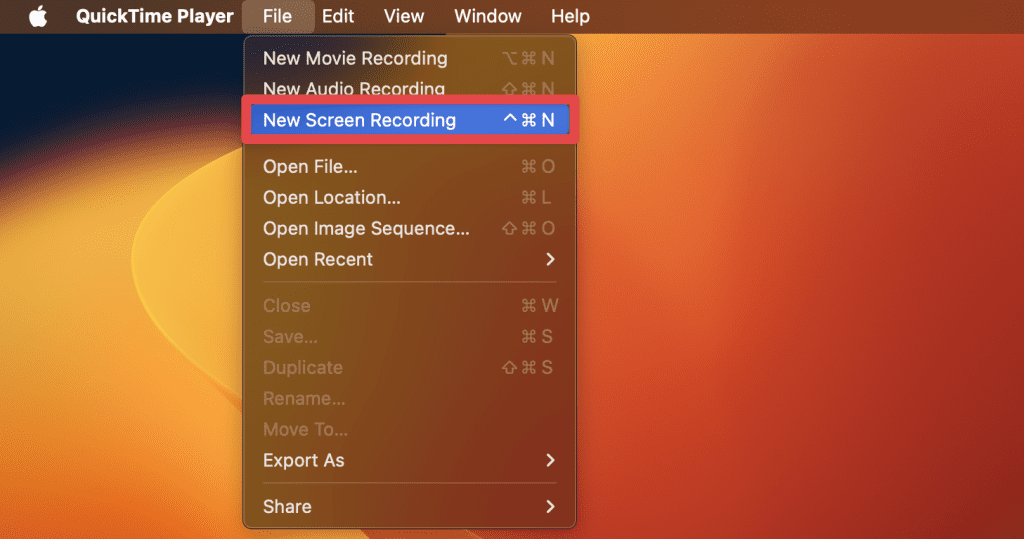
- If Screenshot opens, use its controls. Choose Record Entire Screen, Record Selected Portion, or Record Selected Window on Tahoe 26 or later.
- In Options, choose a microphone for your voice or room sound. On macOS 27 Golden Gate or later, choose Include System Audio to record the Mac’s sound directly. A microphone does not capture system audio directly.
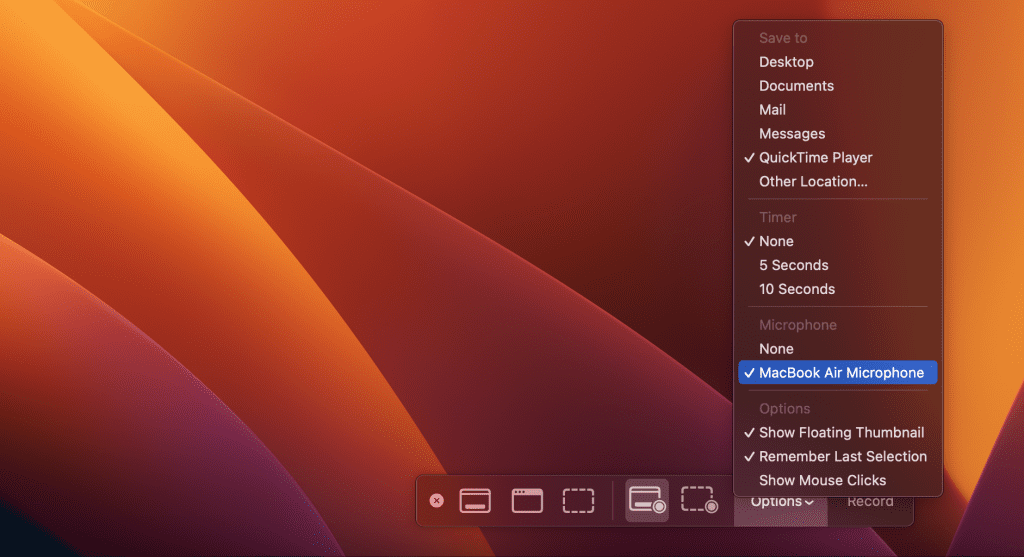
- Once you’ve made your selections, click the Record button.
Stop with the menu-bar Stop control or Command-Control-Escape.
Choose the destination in Options > Save to before recording (Desktop is the current default). Some older macOS versions show a QuickTime recording window instead.
Click the arrow next to Record to choose a microphone if needed, click Record, then click the screen or drag an area and choose Start Recording. Stop from the menu bar.
Apple says that workflow opens the clip in QuickTime after recording stops. The old QuickTime window does not provide Screenshot’s macOS 27 Include System Audio option.
See Apple’s screen-recording guide for the current controls and save location.
To record from a camera in QuickTime, choose File > New Movie Recording. Use Options to select an available camera, microphone and recording quality. Click Record to start and again to stop, then choose File > Save to name and save the clip.
Apple’s QuickTime movie-recording guide shows this camera and file flow. The available camera, microphone, and quality depend on the connected devices.
Apple’s current guide shows that a camera can be the Mac’s built-in camera or a connected iPhone, iPad, iPod touch, or external camera.
3. Using Photo Booth
Photo Booth records camera video, not the Mac screen. If your Mac has a built-in or connected camera, open Photo Booth and use its video controls.
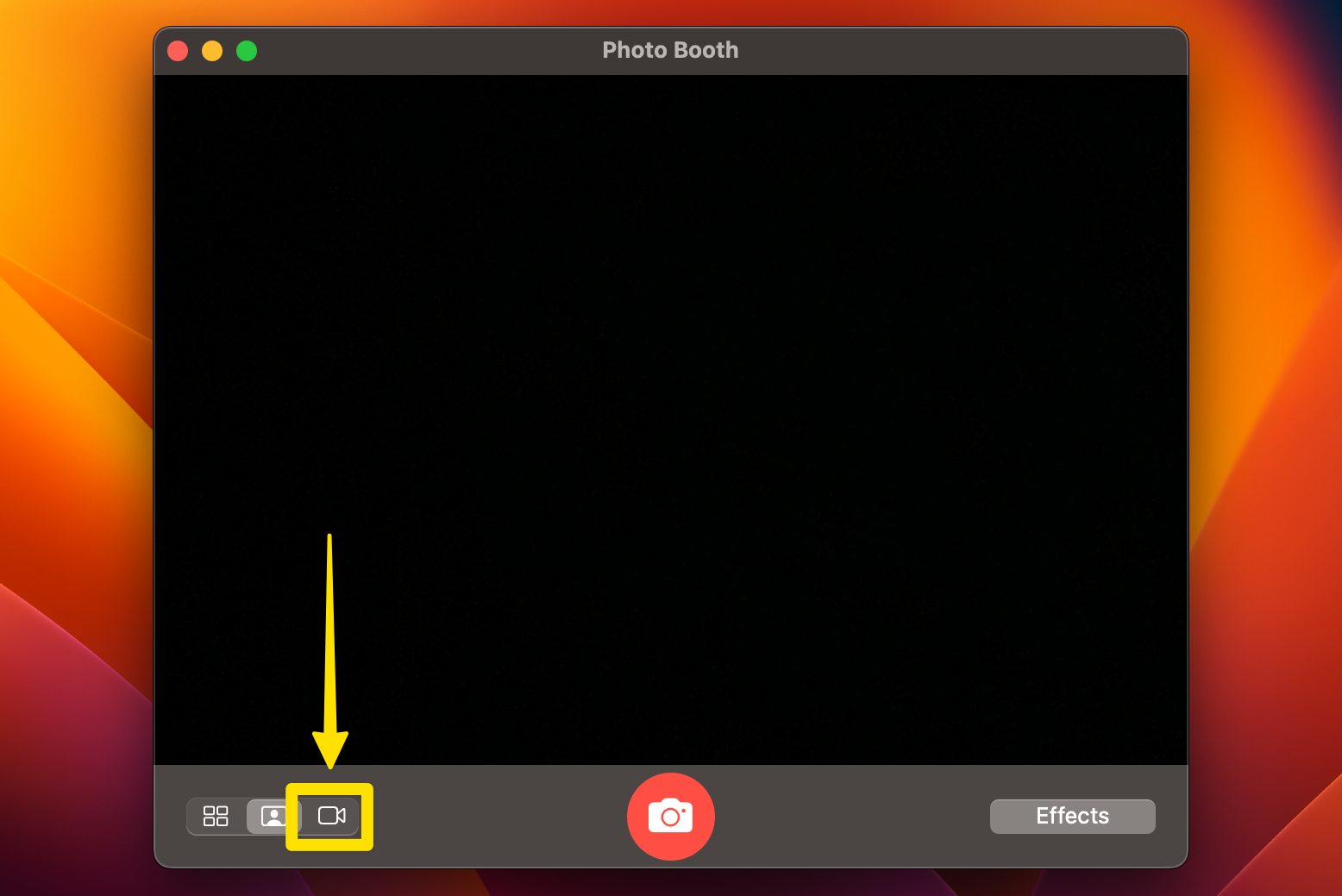
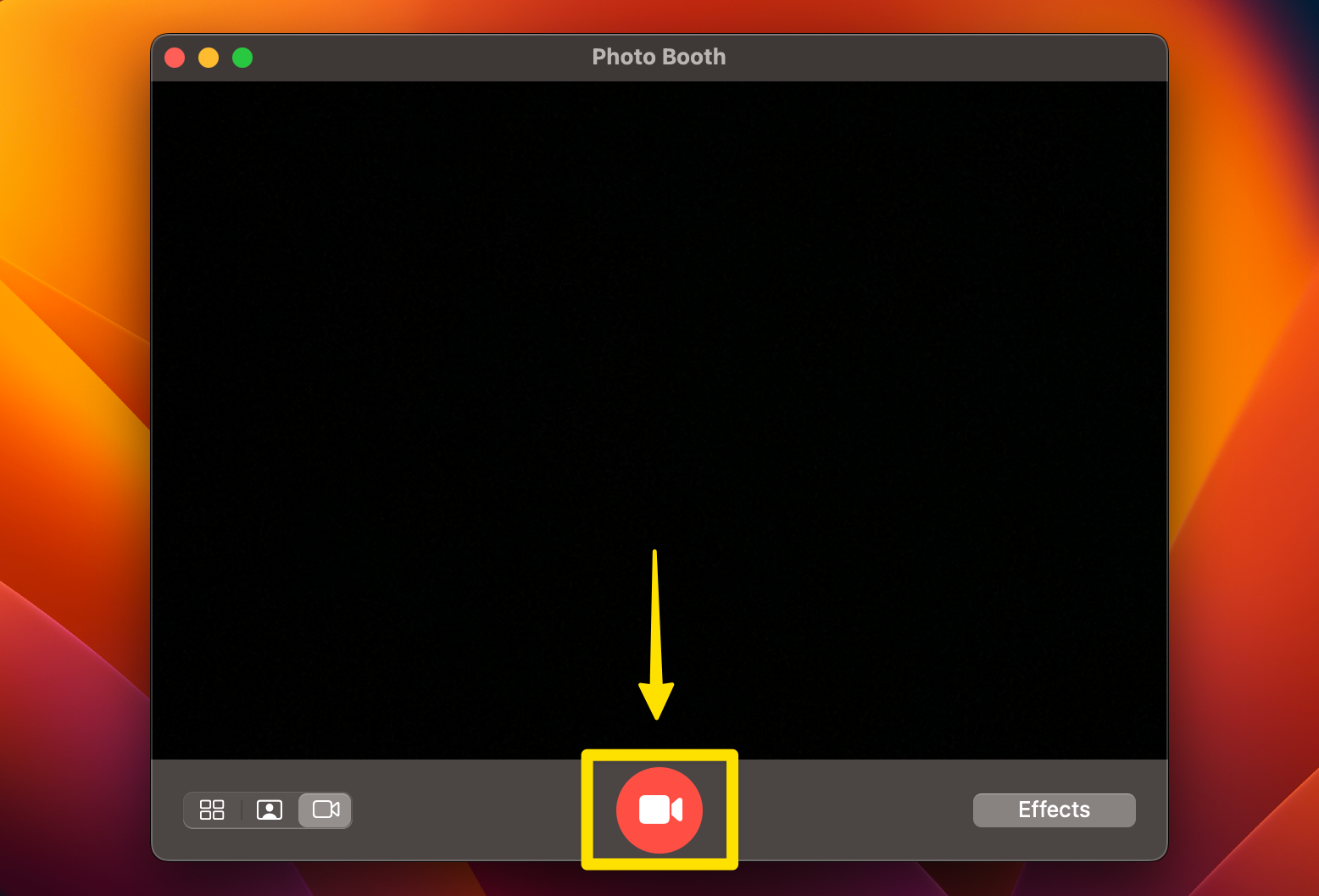
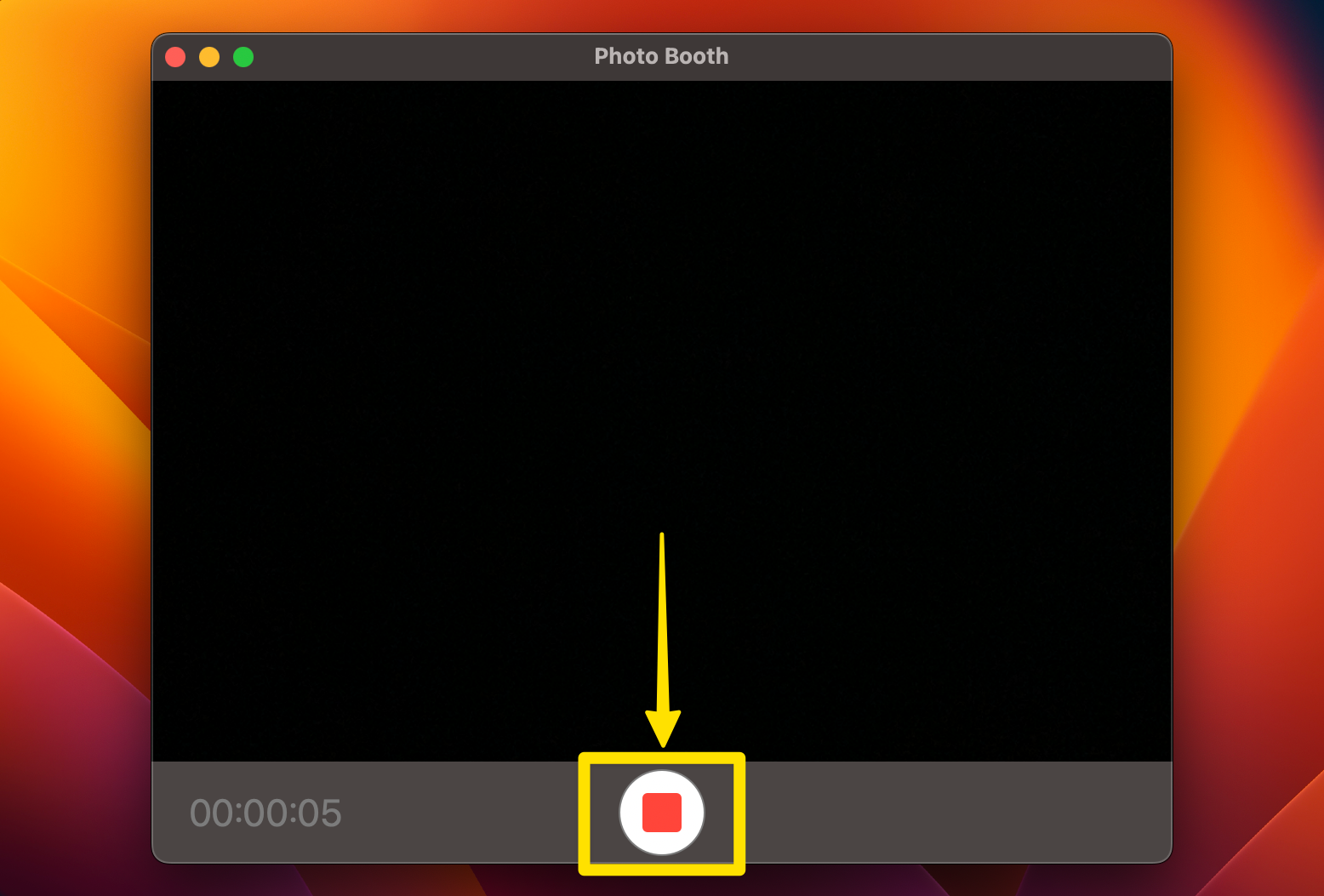
These screenshots show an earlier Photo Booth interface. Apple’s recording instructions identify the current Video, Record Video and Stop buttons.
- Navigate to your Applications folder and open Photo Booth.

- If you are viewing an existing clip, click View Video to return to the capture view. Click the Video button at the bottom left.
- Click Record Video to begin recording.
- Check the preview to confirm the intended camera is selected and framed before recording.
- Click Stop when you finish, then select the clip’s thumbnail to review it.
- To save a separate file, select the clip and choose File > Export. Choose a destination, save it, and open the exported clip to confirm it plays. See Apple’s Photo Booth export instructions.
Audio input and available camera or microphone choices can depend on the Mac and Photo Booth version. Check the app’s controls and make a short test recording before relying on a specific input.
4. Using iMovie
If your installed iMovie version offers camera import, you can capture a clip and edit it in the same project. The screenshots below show an older interface.
Menus and camera availability depend on the iMovie and macOS versions.
- Open iMovie from Finder > Applications or with Spotlight. Launchpad in the screenshot is an older app browser.

- Click Create New.
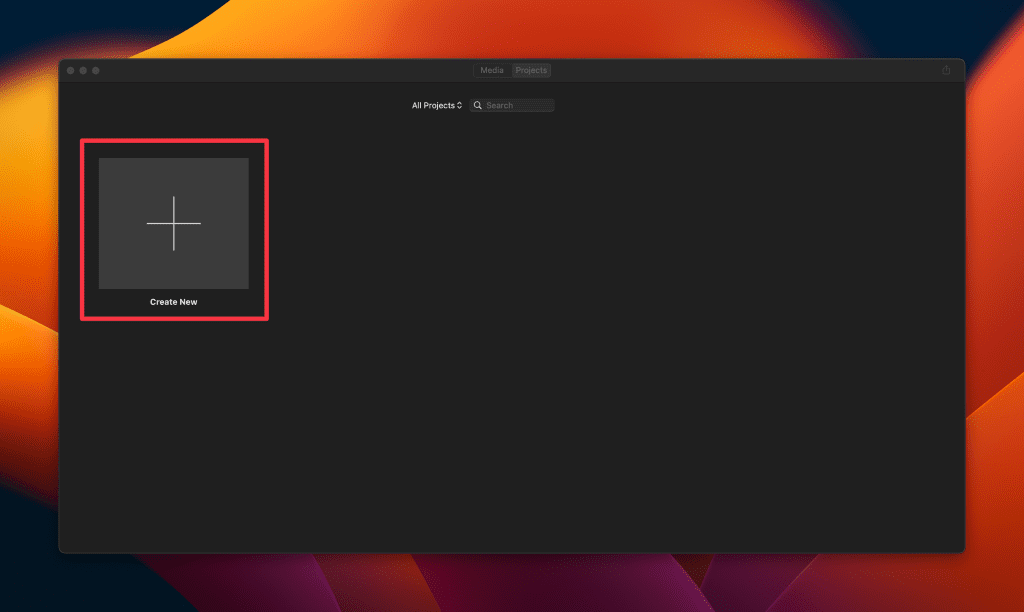
- Select Movie from the dropdown.
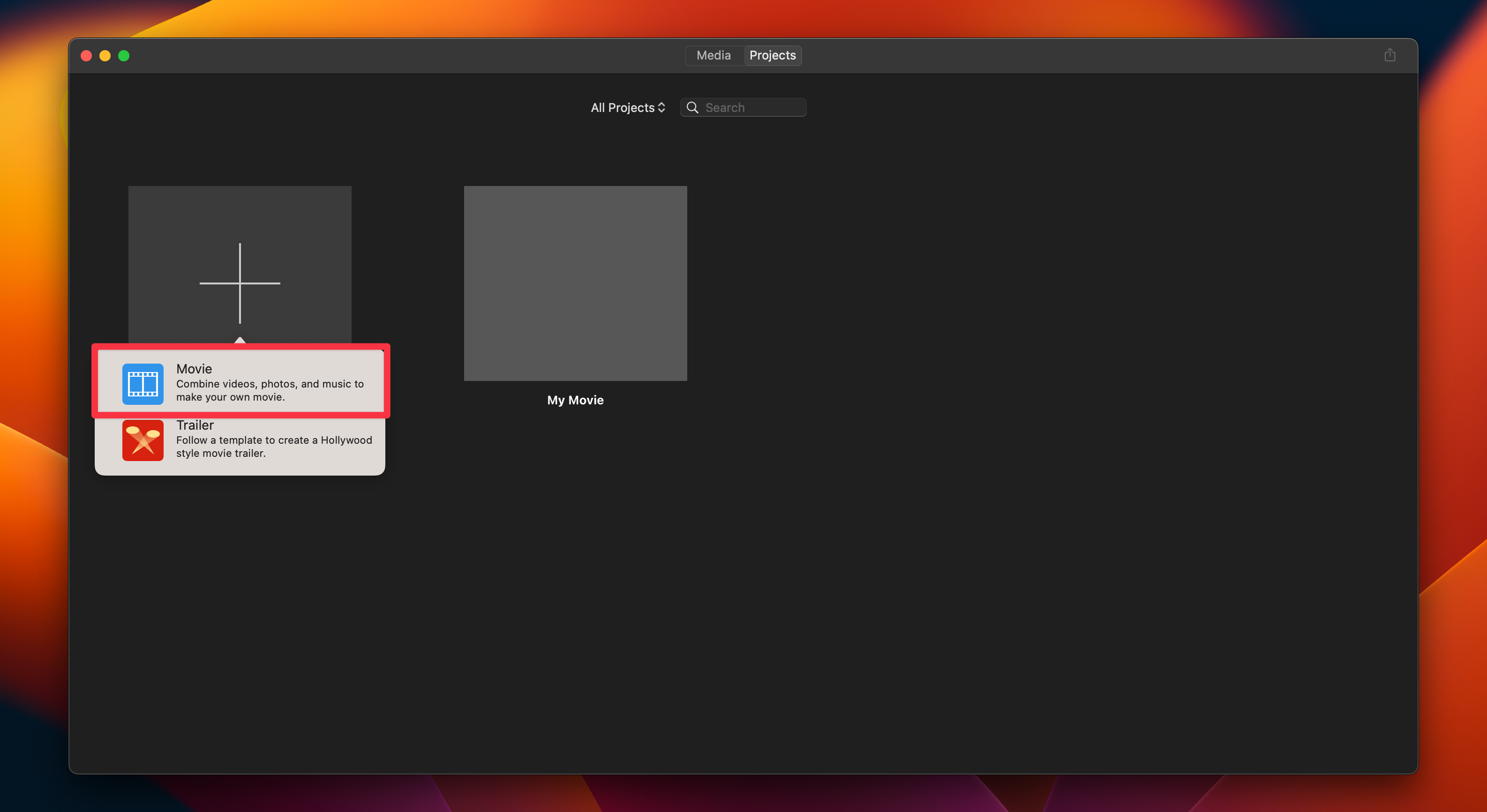
- In the workspace, click Import Media.

- If your iMovie version lists an available camera, select it and use the camera-record control shown in that version. Do not assume every Mac has a working built-in camera or that every camera appears here.
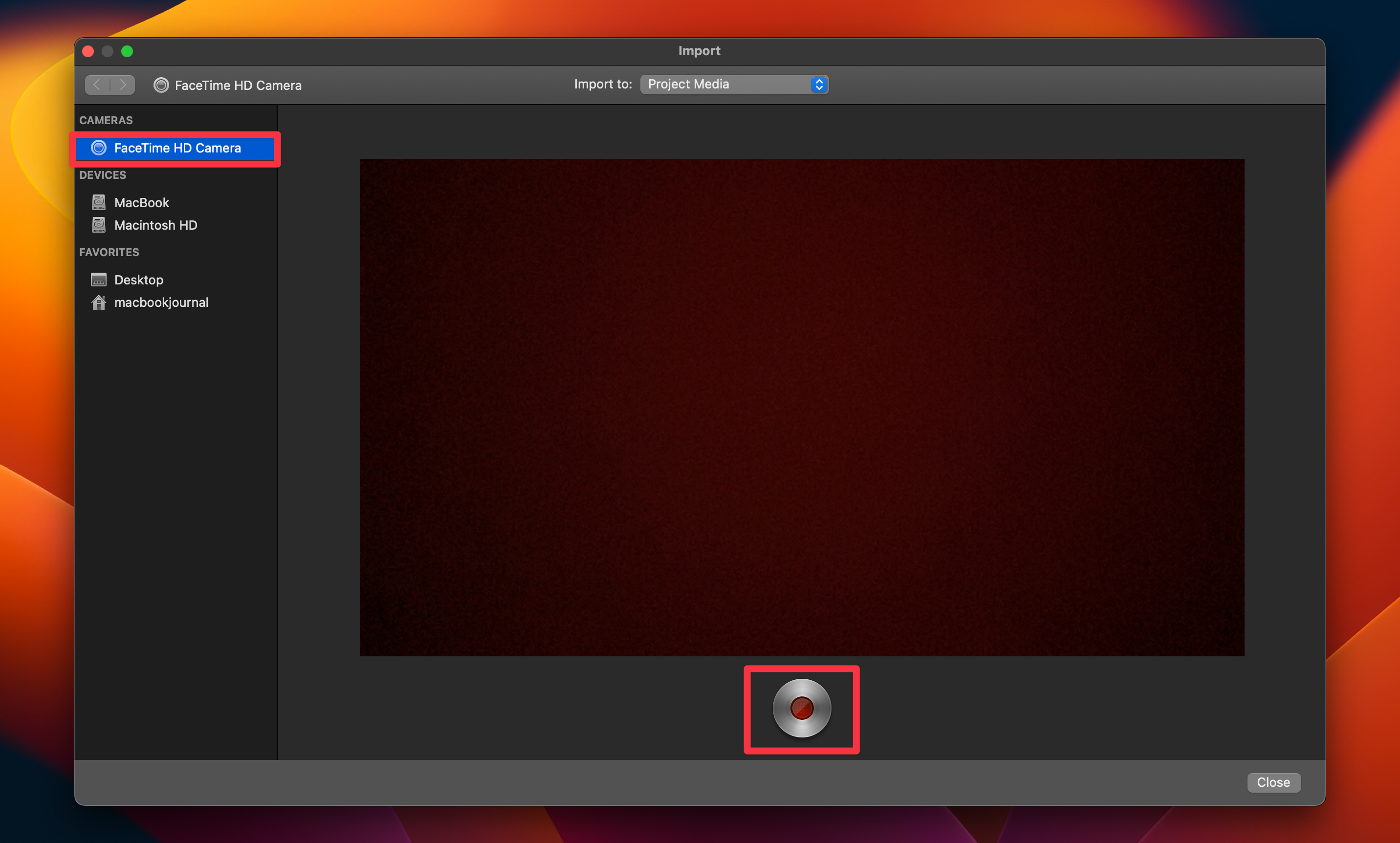
- Check the preview and make a short test before recording a longer clip.
- Click the record button again to stop. The recorded clip will appear in the media library, and you can drag it to the timeline for editing or exporting.
5. Via Third-Party Apps
CleanShot X combines screen, camera, microphone and system-audio capture with click highlights and editing controls. It is useful for walkthroughs or demos that need more polish than a raw screen recording.
- Get CleanShot X from its official site, install it and activate your license. Its current FAQ lists macOS 13 or later and also confirms Setapp availability. Check the license or subscription terms for the route you choose.
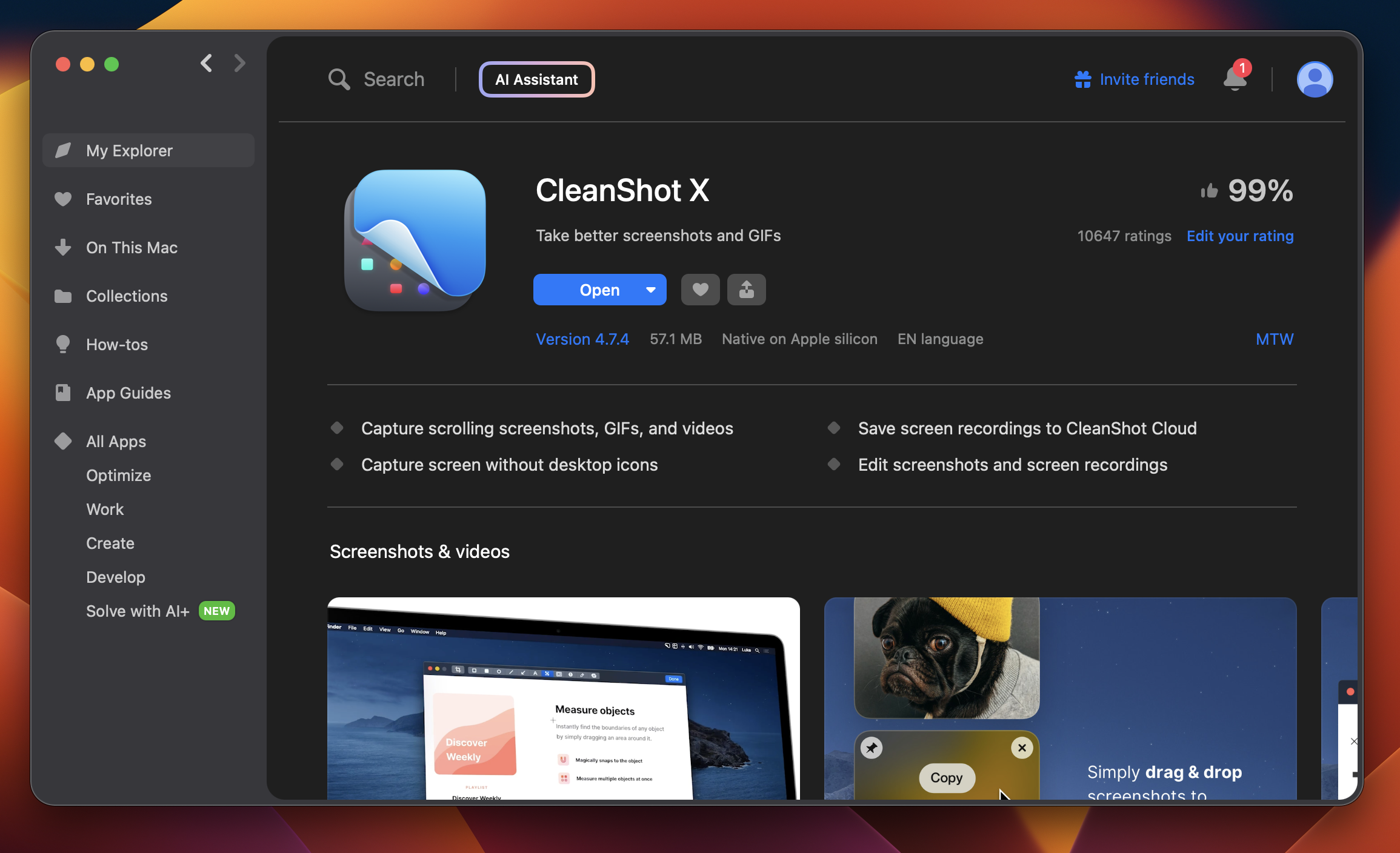
- Open CleanShot X from the menu bar or Applications folder.
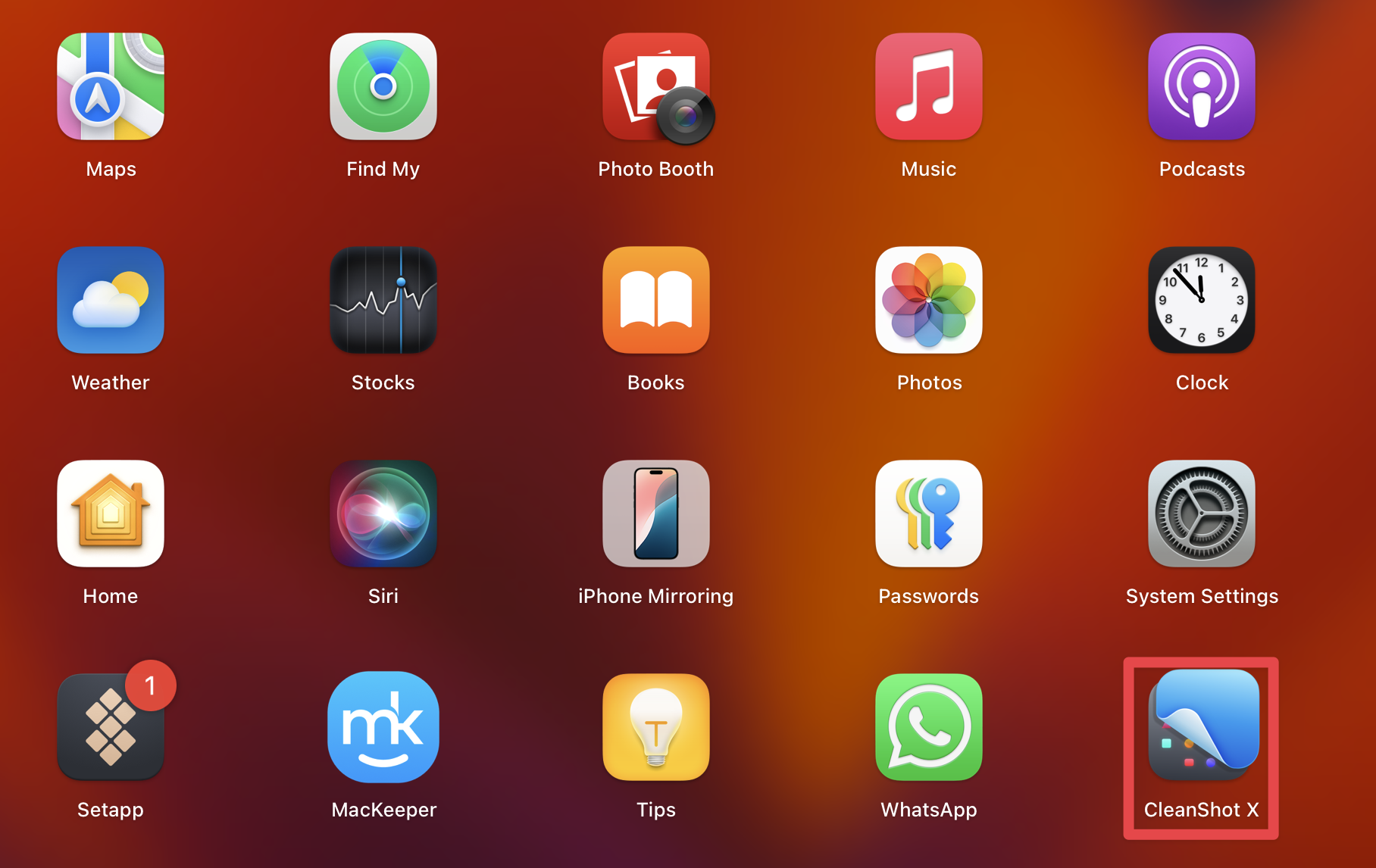
- Open CleanShot X’s menu-bar menu and choose Record Screen.

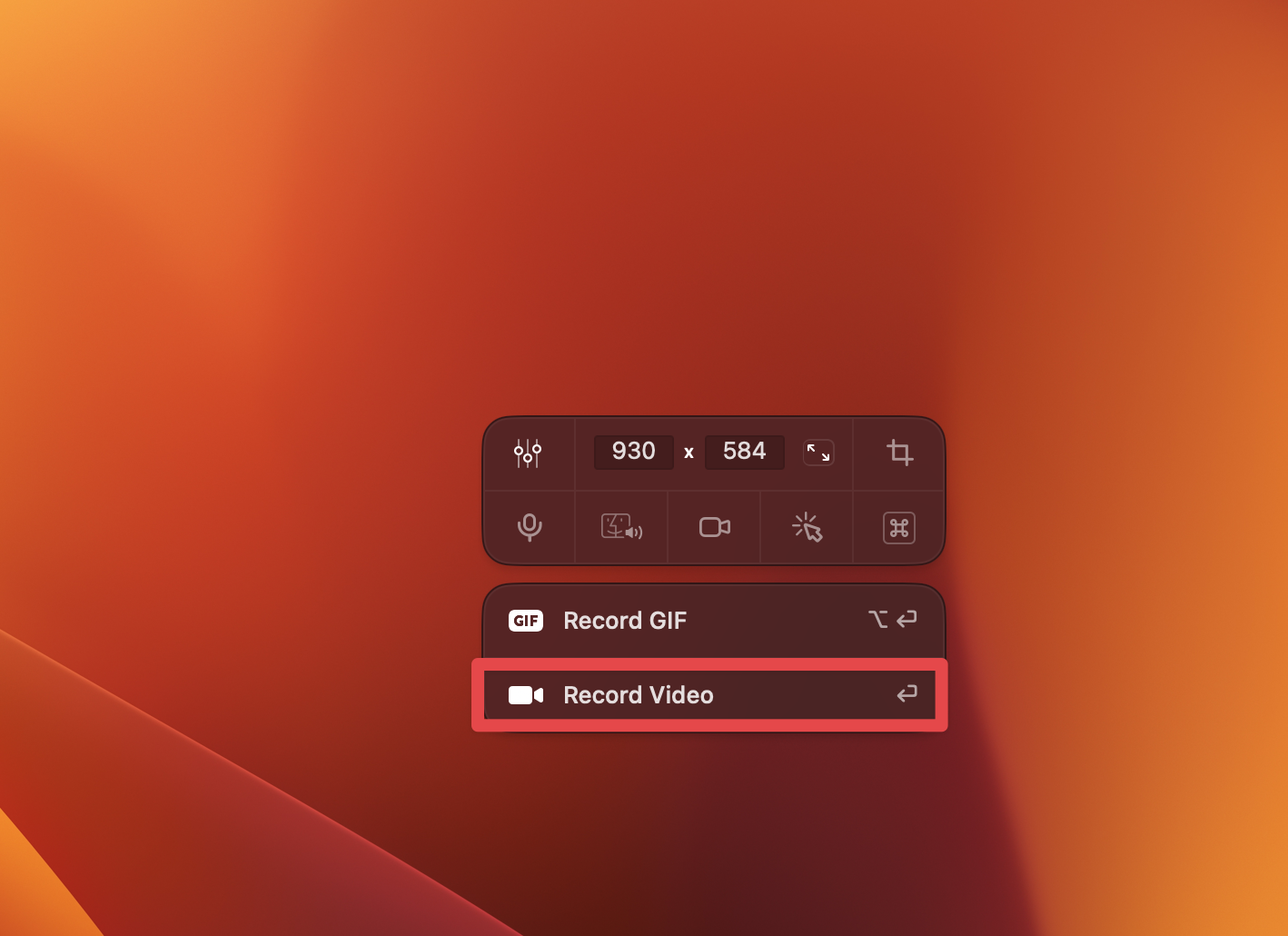
- Choose the capture area offered by your installed version and review the selection before recording.
- Enable the microphone for narration and system audio for the Mac’s sound when needed. Review the macOS screen-recording and audio permissions before granting access.
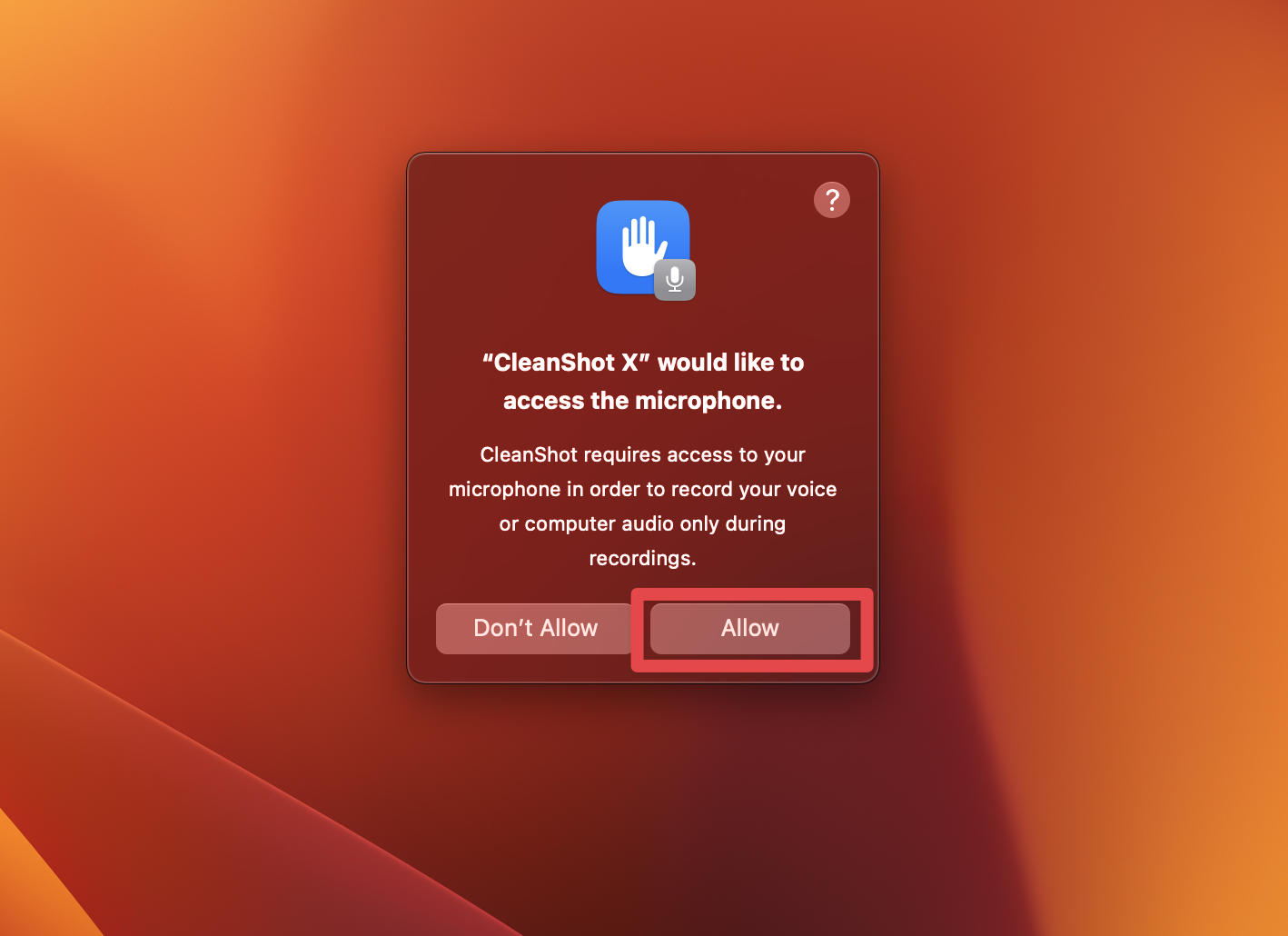
- Start the recording using the control in your installed version.
- Use the Stop control in CleanShot’s recording bar to finish. If you prefer a shortcut, check the binding in the installed app’s Shortcuts settings first.
- Save or share your recording, or edit it directly in CleanShot X.
Play the saved sample to confirm that the intended microphone and system-audio tracks are present.
For the current capture and editing features, see CleanShot X screen recording. Its FAQ covers system requirements and license access.
Record Videos on Your Mac in No Time
Choose a screen recording when you need to show what is on the display, or a camera recording when you need to capture yourself or the room.
Start with the built-in Screenshot controls for screen capture; use a camera app for video from an available camera.
Before recording, select the right audio source, close private windows and confirm the save destination. These related guides cover camera troubleshooting, narration and smaller video files:
- If your Mac camera isn’t responding, it might be worth troubleshooting the issue to ensure smooth video recording.
- You can record audio on your Mac to add it as a voice-over to your videos.
- If you want to upload your videos to social media, you can compress a video on Mac to make it easy to upload.
Frequently Asked Questions
Do Macs allow screen recording?
Yes. Press Shift ⇧ + Command ⌘ + 5 to open Screenshot. Choose Record Entire Screen or Record Selected Portion.
Record Selected Window is available on macOS Tahoe 26 or later. QuickTime Player can also start a screen recording.
Can I screen record on a Mac with sound?
Yes. In Screenshot, choose a microphone in Options to record voice or room sound.
On macOS 27 Golden Gate or later, choose Include System Audio to capture the Mac’s sound directly. A microphone does not capture system audio directly.
How do I record my Mac screen with a keyboard?
Press Shift ⇧ + Command ⌘ + 5, choose a recording control, then click Record.
Stop from the menu bar or press Command ⌘ + Control + Escape.
How do I record on a Mac without an app?
You can record without downloading a third-party app by using the built-in Screenshot controls: press Shift ⇧ + Command ⌘ + 5.
QuickTime Player’s File > New Screen Recording opens Screenshot on current macOS. Choose Options > Save to for the destination before starting.
Why is there no sound when I screen record on a Mac?
Check the selected source. A microphone captures voice or room sound.
For direct system audio, use Options > Include System Audio on macOS 27 Golden Gate or later.
Confirm app permissions, then make a short sample and play it back. Some protected video may not be recordable.
Affiliate disclosure: MacBook Journal may earn a commission when you buy through links on this page, at no extra cost to you.
For version-specific controls, see Apple’s screen-recording instructions and QuickTime camera-recording guide. Close private windows and get permission before recording other people.
How helpful was this article?
Your feedback helps us improve our guides.


