


TL;DR
MacKeeper brings malware scans, junk-file review, app removal and privacy tools into one paid Mac utility suite.
- Its main benefit is handling several maintenance tasks from one dashboard.
- Full Disk Access is needed for broader antivirus scans and Real-Time Protection; review each requested permission.
- Compare the upfront charge, renewal price and included features before choosing a plan.
MacKeeper At A Glance
| Product | Paid macOS utility suite from MacKeeper |
| Review basis | Public product and help documentation; no hands-on testing or independent performance measurements. |
| Main jobs | Malware scanning, cleanup, privacy tools, app management, support |
| Permissions | Antivirus asks for Full Disk Access for full-disk scans and real-time protection |
| Price | Personalized checkout; verify total, billing period, renewal, and Mac count before paying |
| Native tools compared | macOS includes XProtect, Gatekeeper, storage tools, Activity Monitor, and login-item controls |
What Is MacKeeper?
MacKeeper combines security, storage cleanup, app-management, privacy, and support features in a single macOS app. It is aimed at people who prefer a guided dashboard and want several utilities from one vendor.
The practical benefit is one place to review several jobs: inspect a scan result, check junk categories, manage apps and open the privacy tools you use.
| Feature | What vendor documentation describes |
| Antivirus | Home-folder and custom file scans, with real-time checks when protection is enabled. |
| Adware Cleaner | A separate tool described as finding and removing adware. |
| Safe Cleanup | Reviews categories of files the app labels as removable; examine items before deleting. |
| Duplicates Finder | Groups duplicate or similar files for review and removal. Check selections carefully. |
| Smart Uninstaller | Finds installed apps and related files; the help guide says no apps are selected for removal by default. |
| Memory Cleaner | Displays memory use and offers a cleanup action; macOS already manages memory automatically. |
| Update Tracker and Login Items | Vendor guides describe checking app updates and managing startup items. Exact interfaces in older guides may have changed. |
| ID Theft Guard, VPN, StopAd | Privacy features are described by the vendor; value depends on your needs, plan and current feature availability. |
| Find & Fix and support | A dashboard flow that groups checks and directs users to tools. Paid support scope should be confirmed in the current offer. |
MacKeeper Review: What Can MacKeeper Do?
MacKeeper suits people who want several maintenance tools in one app. A typical review can move from a malware scan to storage categories and unused apps without switching between separate utilities. It adds a subscription and background software, so choose features that match the work you need to do.
This review uses MacKeeper’s public product and help documentation, not an app installation or hands-on tests. The current site lists version 7.8; some help guides describe version 6.0. The retained images show earlier interfaces. Feature descriptions below explain the documented workflows, not measured speed or detection results. Review requested permissions before enabling a tool.
The Best Thing About MacKeeper

A single place to reach several utilities may suit someone who finds macOS settings scattered or wants guided explanations.
For example, you can inspect cleanup results and review unused apps in the same app. That consolidated workflow is its main convenience benefit; actual speed and scan results depend on the Mac, workload and files.
1. Antivirus: File scans and Real-Time Protection

MacKeeper’s Antivirus guide describes a default Home-folder scan, scans for selected files or folders and Real-Time Protection. Choose a targeted scan for an item you want to inspect, or review the broader scan option for your files.
Broader scans and Real-Time Protection require Full Disk Access, which gives the app extensive file access. Review the macOS permission prompt and grant it only when you understand and want that coverage.
A scan result reflects the items and threats the scanner checked. A result with no threats found does not establish that every threat is absent.
Keep macOS updated and its protections enabled alongside the app. Apple describes Gatekeeper, notarization and XProtect as complementary layers against malicious software.
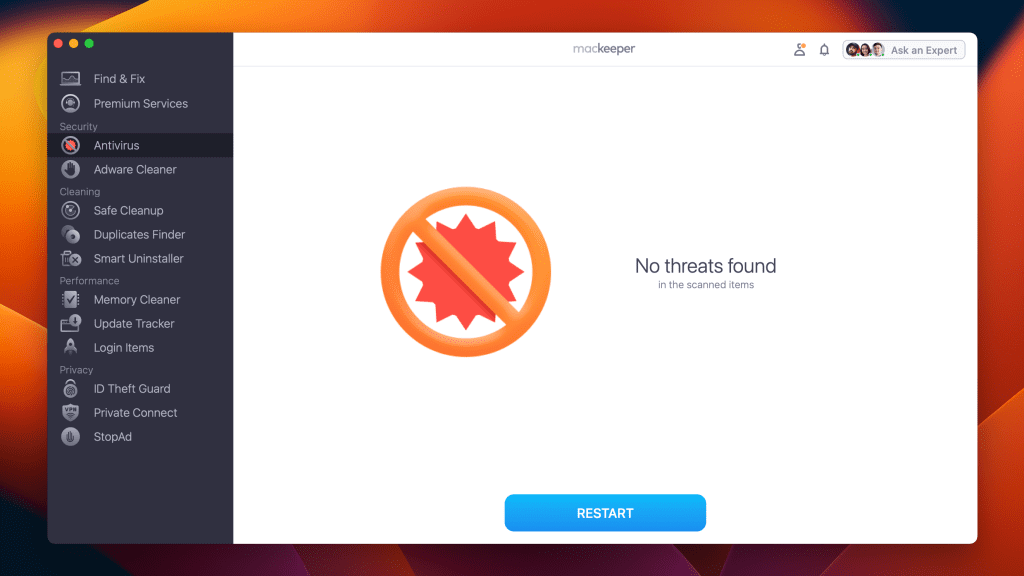
Get MacKeeper from its official site, open Antivirus and choose the scan scope you need. Review detected items and the proposed action before accepting a change.
2. Adware Cleaner: A separate adware check

MacKeeper’s Adware Cleaner scans for advertising software and groups detected items for review. Open it when investigating unwanted advertising behavior, then inspect the results before removal.
This is a separate review for advertising software rather than a substitute for inspecting the browser settings involved in a persistent pop-up problem.
For pop-ups confined to one browser, also inspect its extensions and website-notification permissions. Those settings can explain unwanted prompts even when a malware scan finds no threat.

3. Safe Cleanup: Review files before removing them

Safe Cleanup groups common junk categories for review, helping you inspect logs, caches and other suggested files in one place.
Review the file list before removal and keep an independent backup of important files. Deleting a cache can require an app to rebuild it; deleting a file you still need can cause data loss. Keep uncertain items unchanged.

4. Duplicates Finder: Find copies, then choose carefully

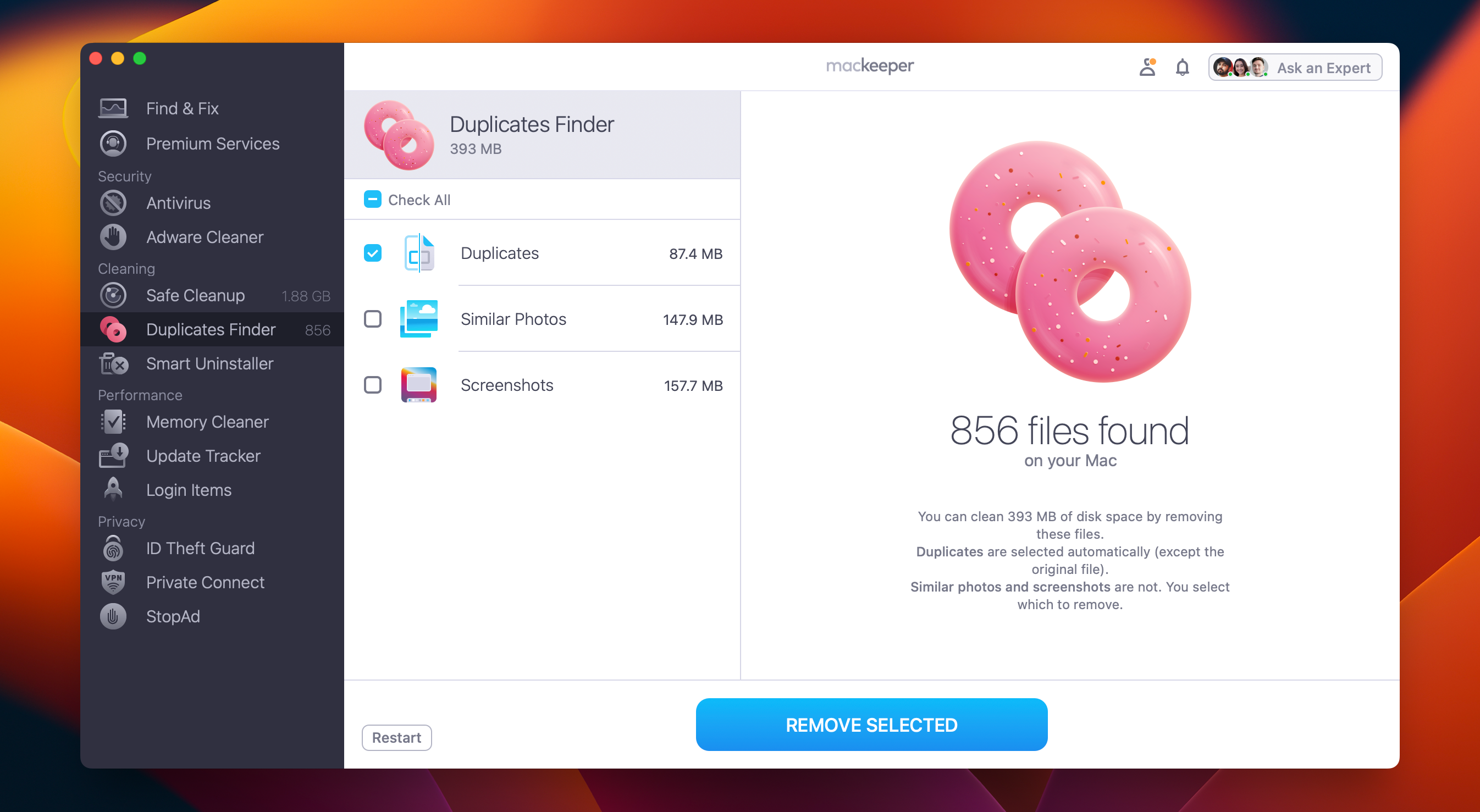
Duplicates Finder groups file copies and similar images so you can compare them together. The documented workflow can automatically select copies while retaining an original; review and change those selections before removal.
Because that selection rule can remove files, inspect each group and open files before deletion. Similar photos are not always interchangeable, and synced folders may propagate deletions.
For a small ordinary folder, manual comparison can be manageable. A grouped review is more useful when copies are spread across several folders; our duplicate-file guide explains what to compare before deletion.
5. Smart Uninstaller: Review apps and related files

MacKeeper’s Smart Uninstaller guide describes listing installed apps and related files in one place. This helps you review components associated with software you no longer use. Its documented app list starts with nothing selected, leaving the removal choice to you.
Open Smart Uninstaller, start the scan and select Applications. Review the app and related files, then choose Remove Selected and confirm only the intended removal. Back up important app data first.
If an app supplies its own uninstaller for extensions or helpers, follow its developer’s instructions. Removing an app also does not cancel a subscription or necessarily remove the documents created with it. Our app-removal guide covers these distinctions.
6. Memory Cleaner: A dashboard over macOS memory
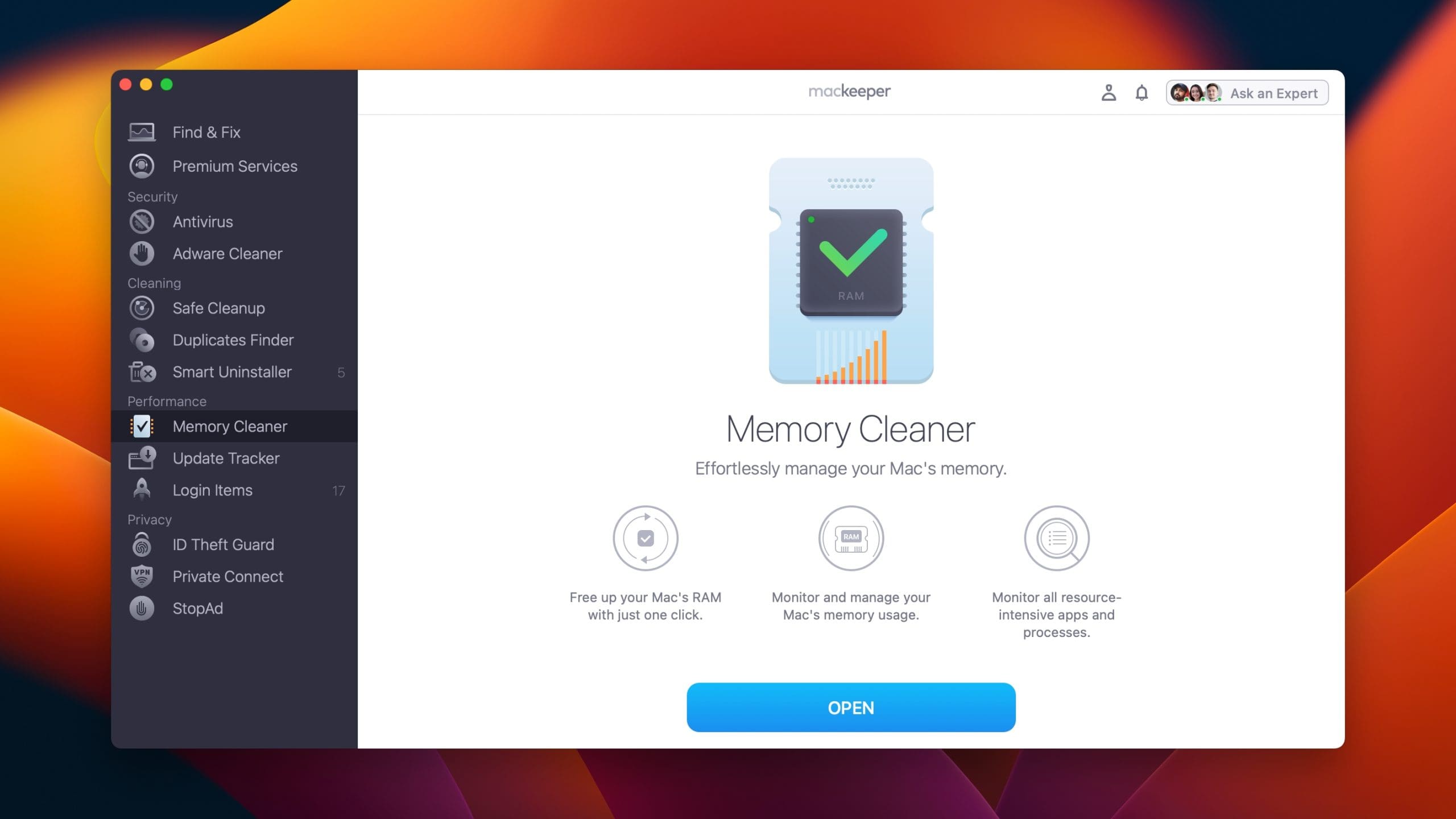
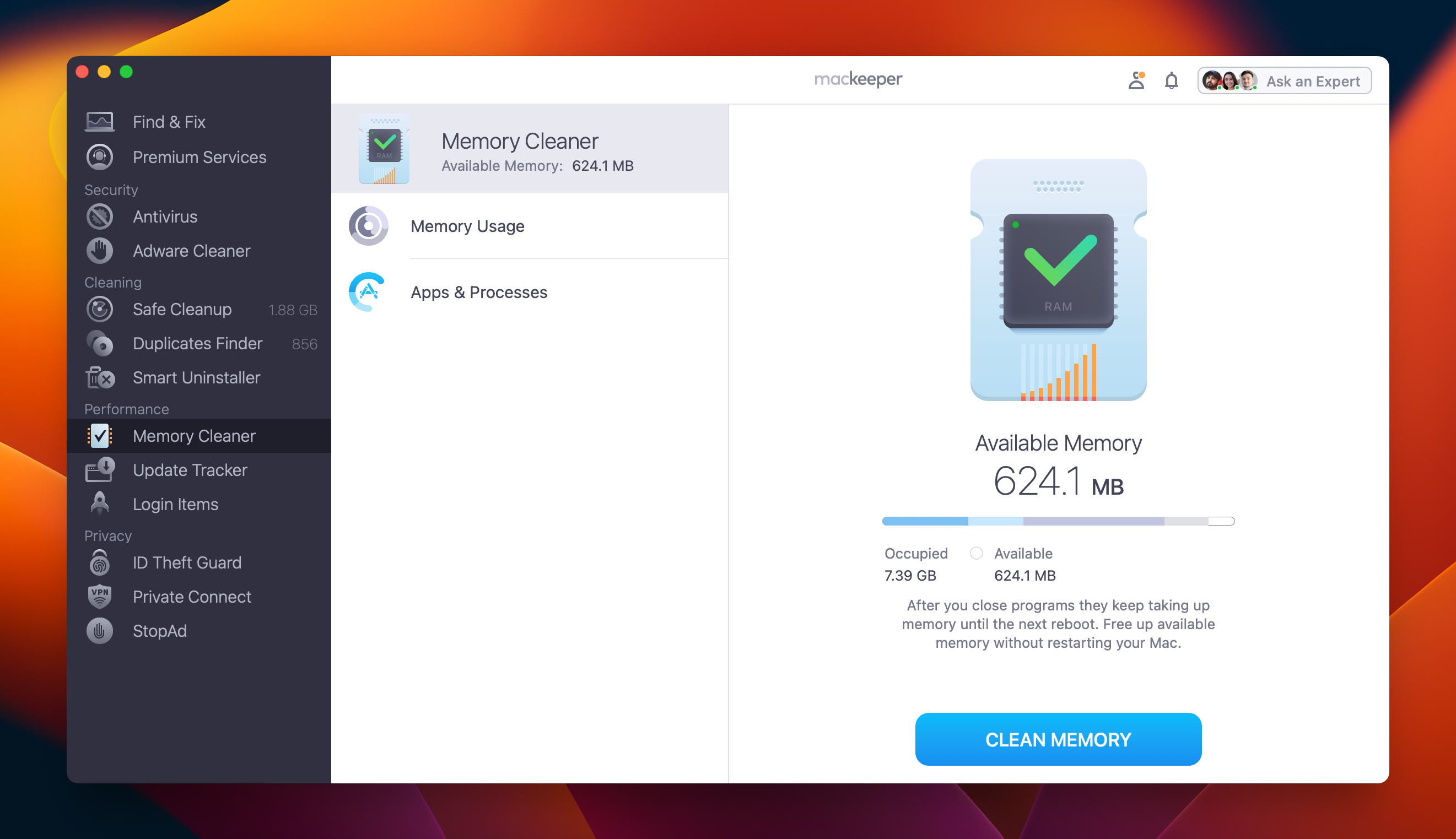
MacKeeper’s version 6.0 Memory Cleaner guide describes a tool that displays memory details and offers a Clean Memory action. Clearing cached memory is not a dependable way to make a Mac faster:
macOS manages memory and can reclaim it when apps need it. Apple’s Activity Monitor guide explains the Memory Pressure graph, which summarizes whether the system can manage memory under the current workload.
If pressure stays high, close or investigate the apps using the most memory, reduce workload, or consider whether the Mac’s memory capacity fits what you run.
7. Update Tracker: Check app updates
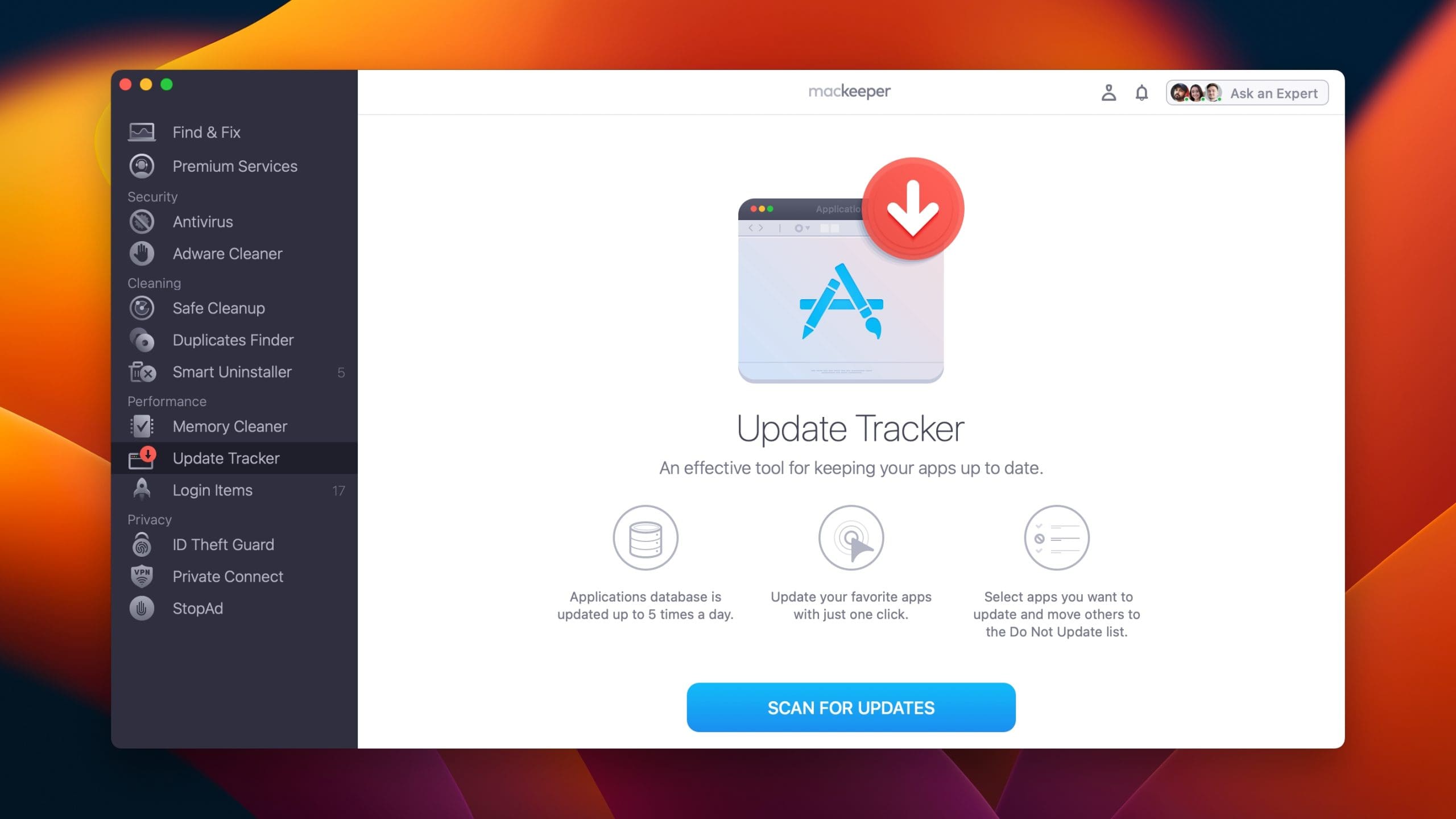
Update Tracker brings supported app updates into one review list. Check each update’s source and version; apps distributed through other channels may still need their developer’s updater.
You can update apps from the Mac App Store there, and use each developer’s official updater or website for apps installed elsewhere; see our Mac app update guide.
Check the source and version before installing any update.
8. Login Items: Manage what opens at startup
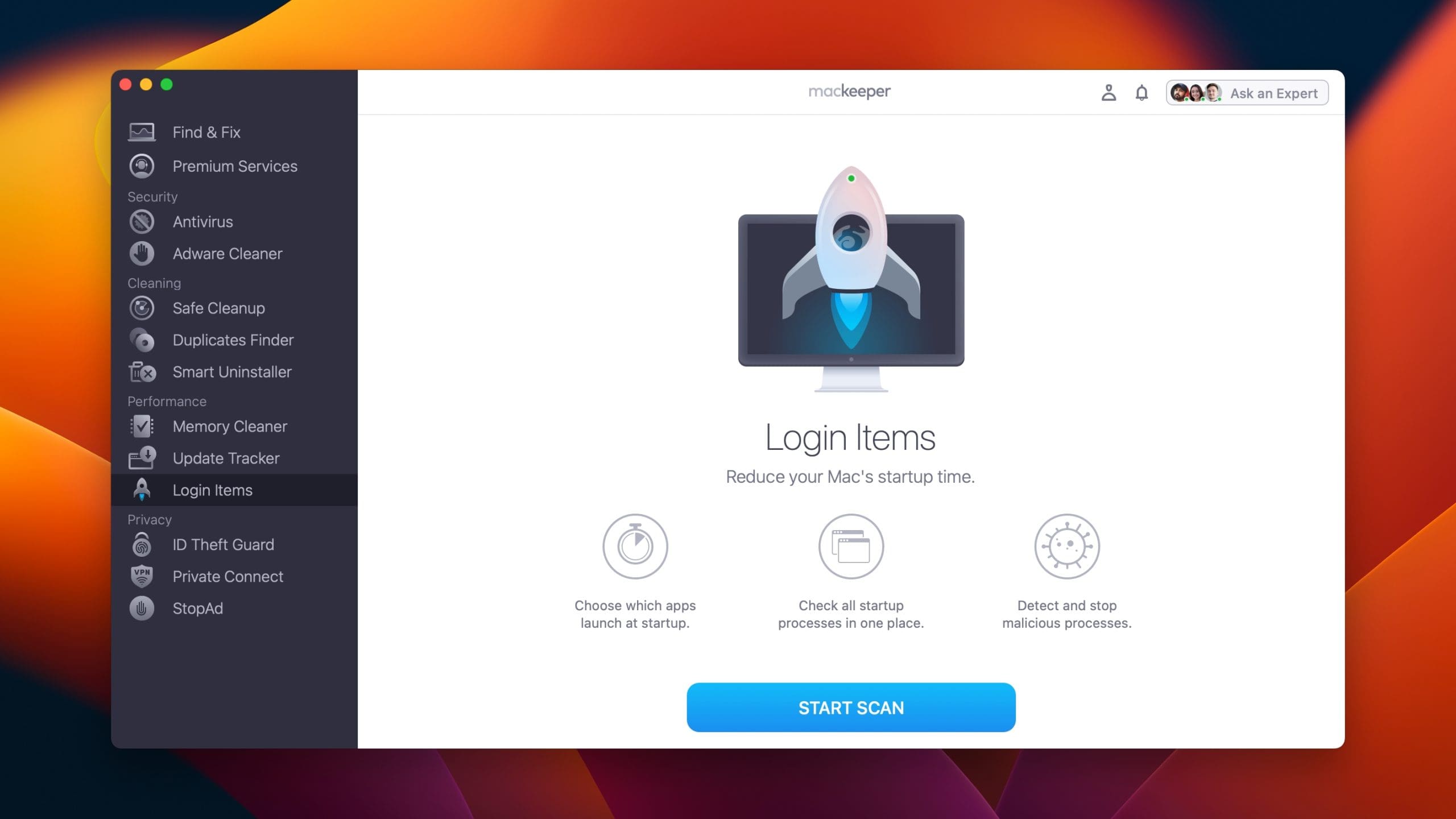
Login Items gathers startup programs for review. Use it to identify an app that opens at login and disable its automatic launch if you no longer need it there.
macOS has built-in controls under System Settings → General → Login Items, where you can review apps that open at login and background activity. Apple’s Login Items guide explains these settings.
Remove only entries you recognize and do not need at login: security, sync and device utilities may need to run in the background. Disabling an unnecessary startup app may reduce its startup work, but does not resolve every cause of a slow Mac.
9. ID Theft Guard: Email breach monitoring
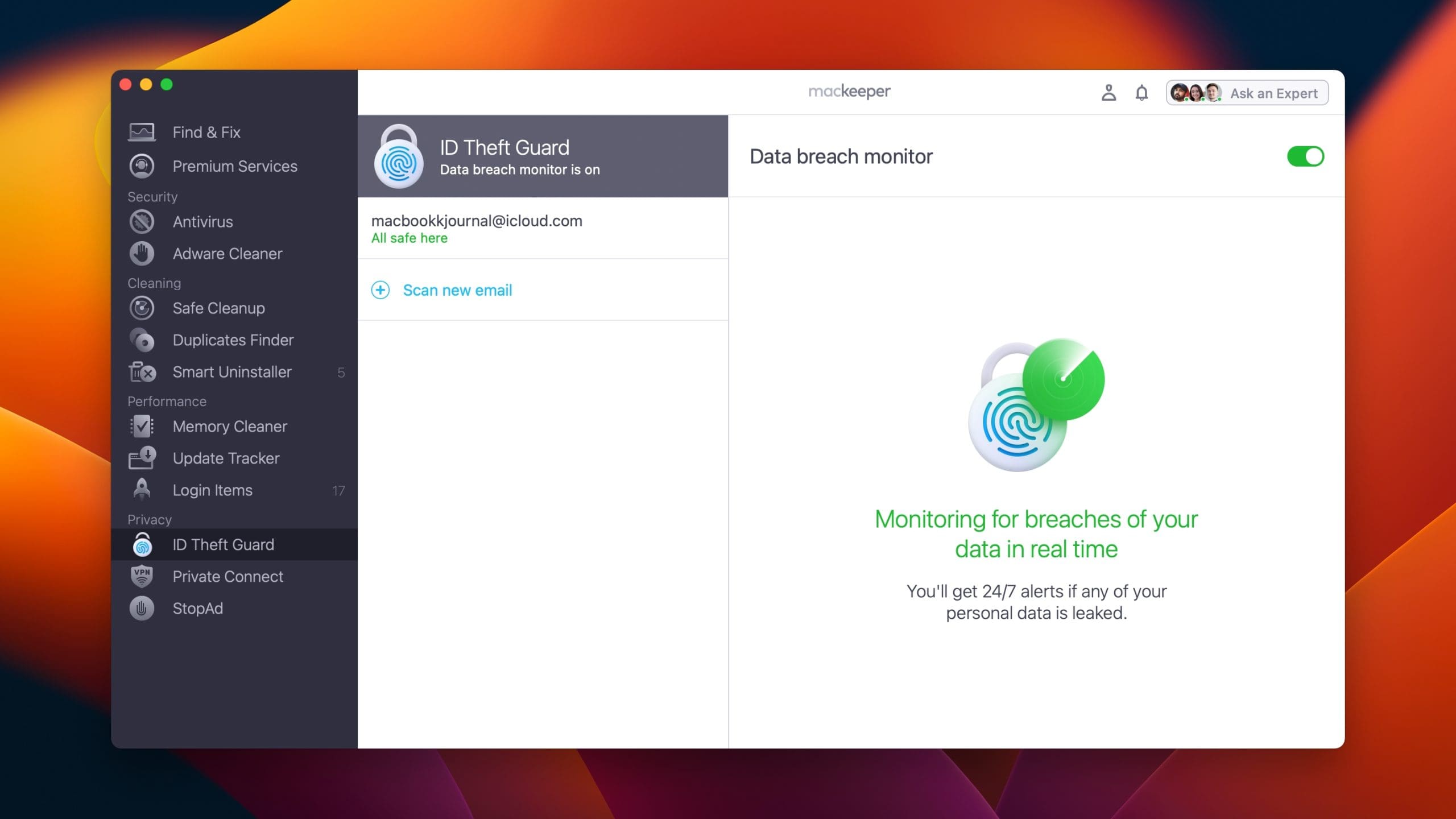
ID Theft Guard checks owned email addresses against breach records and monitors for new matches. It can alert you to recorded exposure, but cannot prevent a company breach or reverse data already exposed.
Use unique passwords and a password manager, enable multifactor authentication, and change credentials when a service reports exposure.
Check what personal data the app asks you to submit and confirm the current feature and subscription terms before enabling it.
How to check your email with ID Theft Guard
ID Theft Guard checks email addresses against breach records and can monitor for new matches. It is separate from the passwords saved on your Mac.
Check that ID Theft Guard is included in your plan. The vendor’s documented flow uses these controls; follow your installed version’s labels when they differ.
- Open MacKeeper and select ID Theft Guard.
- Select Check for Breaches for a linked address. To check another address you own, choose Scan new email.
- Enter that address and start the scan. Use Send Code if asked to verify ownership.
- Find the verification message in your inbox, then enter its code in MacKeeper. Check Spam or Junk if it does not arrive.
- Open Review to inspect matches. Check the affected service, breach date and types of information involved.
- Change exposed credentials at the affected service. Mark a record fixed only after you have taken the relevant action.
- After the scan, choose Continue, then Turn On Monitoring for future alerts.
The official ID Theft Guard instructions cover its controls. Never share a verification code with someone offering to check your account.
What should you do after a breach alert?
Start with the account named in the alert. Open its website yourself, check its security settings and replace any exposed password you still use.
If you reused that password elsewhere, change those accounts too. Use a different password for each account and enable two-factor authentication where available.
An old breach can contain an old password. Compare the breach date with your account history before deciding what needs changing.
A result with no matches means the service found no matching records in its coverage. It cannot establish that every account is safe.
Have I Been Pwned explains the limits of breach searches, including why coverage is not a guarantee that every exposure will appear.
Check saved-password warnings with Apple Passwords
On macOS Sequoia 15 or later, Apple Passwords can flag weak, reused and compromised saved passwords. Open Passwords > Security, then select an account.
Read the warning and choose Change Password to update it on the service’s website or in its app.
In Passwords > Settings, check Detect Compromised Passwords if you want these warnings. Apple’s password security instructions explain the controls.
If you need to locate a saved login first, follow our guide to finding saved passwords on your Mac.
10. VPN Private Connect: A bundled VPN option
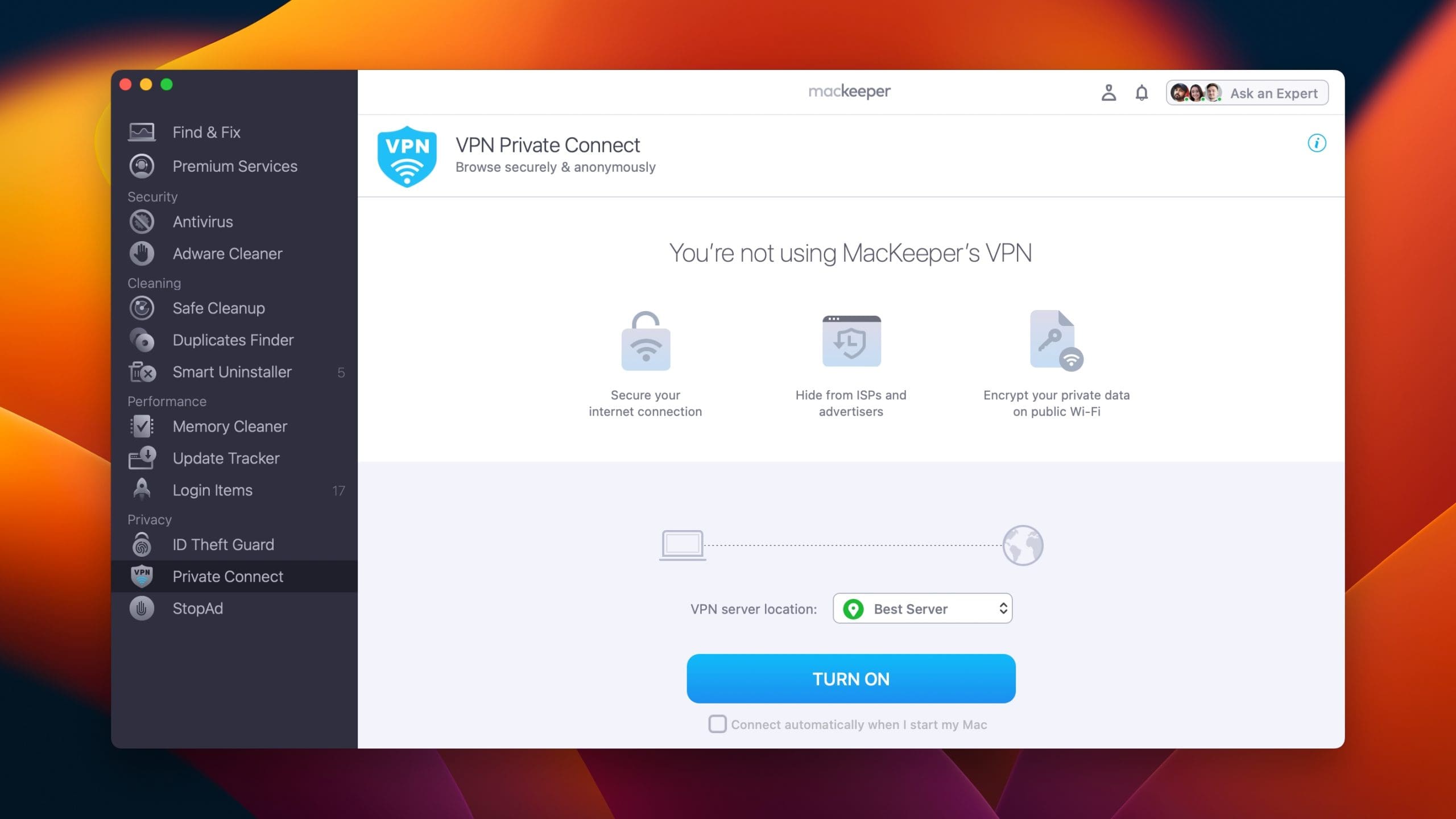
VPN Private Connect routes traffic through a VPN provider to help protect traffic on untrusted networks and change the apparent network location.
It does not make browsing anonymous or protect against phishing, malicious downloads, or account tracking. Review the provider’s privacy policy, supported locations, connection limits, and current subscription terms.
Match the available locations and connection limits to your actual devices and travel needs; compare privacy and billing terms as well as the bundled features.
11. StopAd: Browser ad blocking
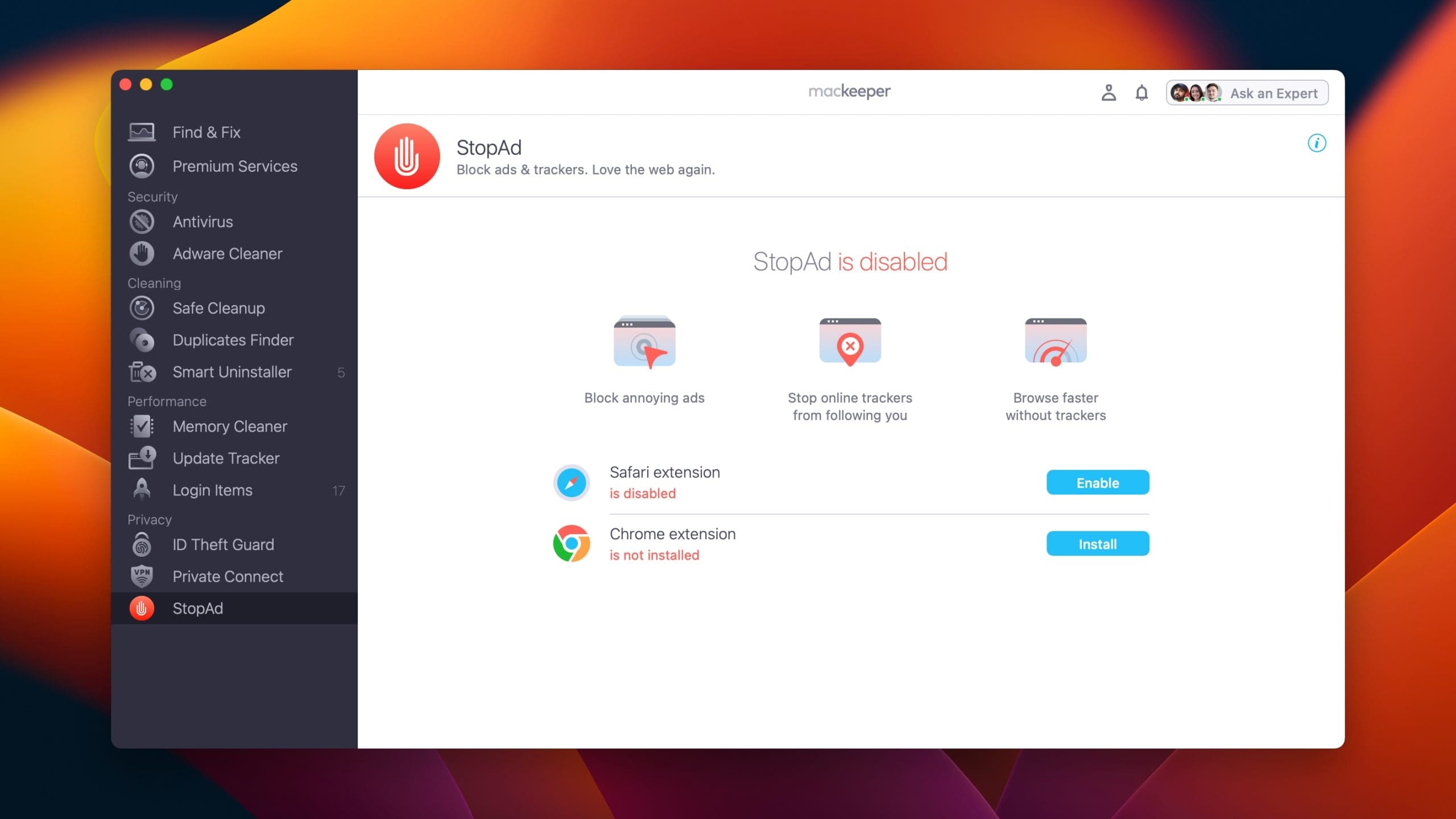
StopAd is MacKeeper’s browser-extension tool for blocking ads and trackers. Check its current official listing for browser support and requested permissions before installing.
Ad blocking can affect logins, checkout or other site features. If a trusted site breaks, check the extension’s controls and allow-list that site when appropriate.
12. Find & Fix: A combined dashboard
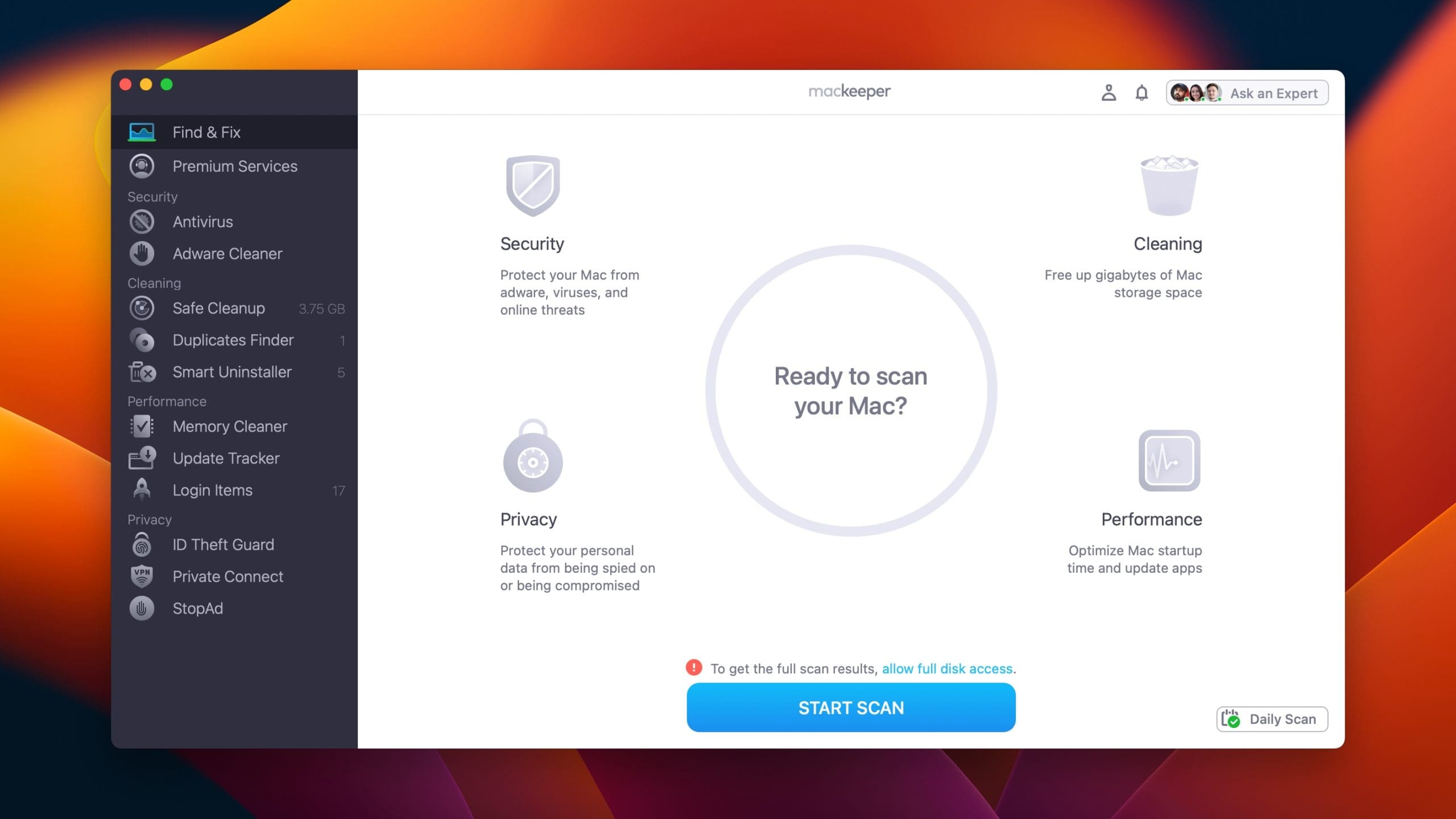
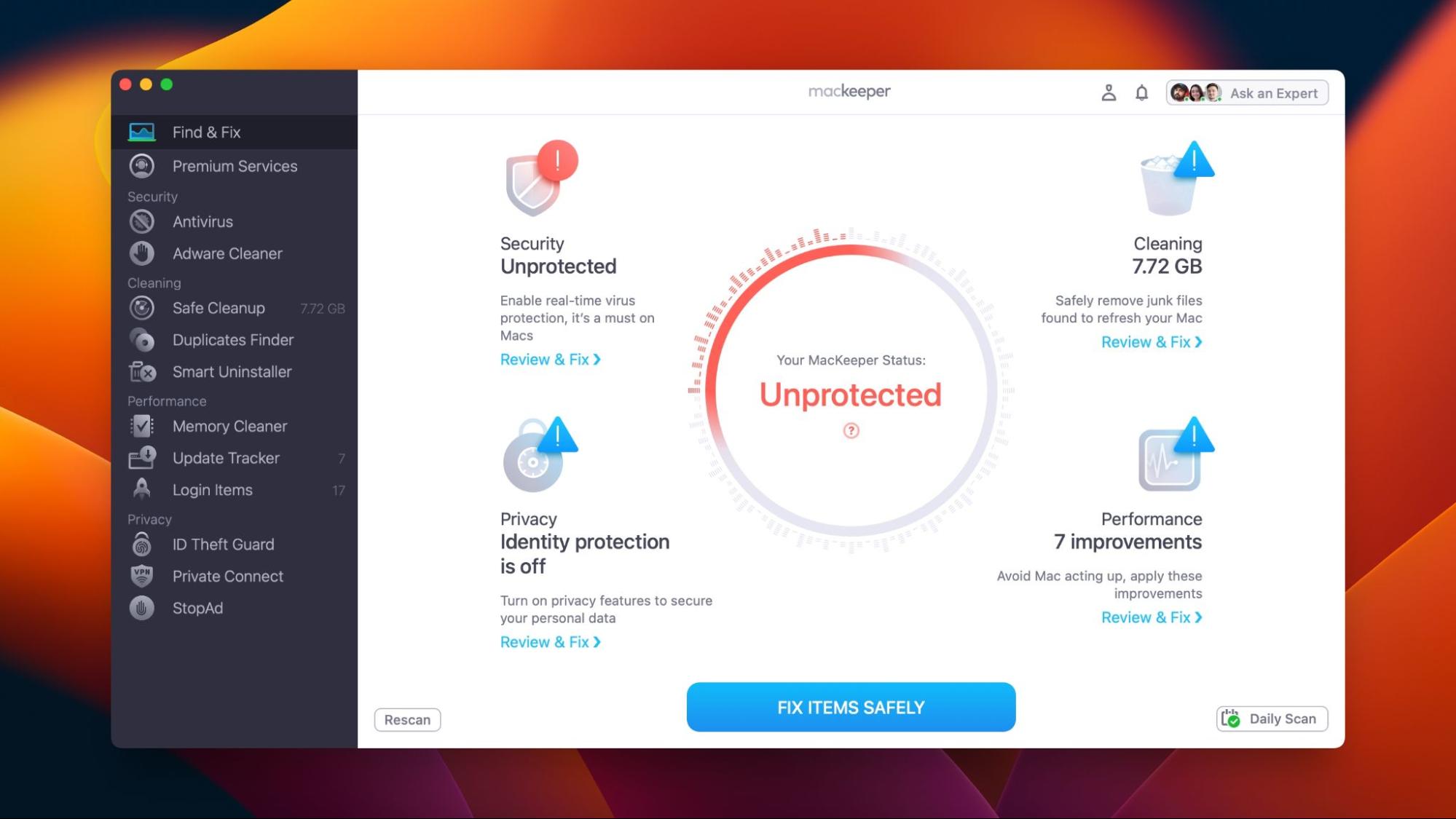
Find & Fix groups several MacKeeper checks and directs you to the matching tools. Review its findings to choose which maintenance task to address first.
Inspect each proposed change before accepting it. A combined “Fix all” action can change or delete several items, so use the individual review controls when you need to check a result.
MacKeeper Tech Support: What to confirm
MacKeeper advertises in-app support and additional Premium Services. The support channel can be useful when you want guidance with the app, but this review did not contact support or measure response times or service outcomes.
Before paying extra, confirm which support is included in your plan, what the service covers, how remote access works, and how to stop recurring charges.
Never share a password or one-time login code with a support agent.
MacKeeper Pricing and Plans
MacKeeper’s pricing page routes to a personalized checkout. Compare the actual offer presented there, including the upfront payment and renewal amount, rather than relying on a monthly equivalent alone.
The checkout displayed choices described as one-month coverage for one Mac and twelve-month coverage for one or three Macs, but the displayed offer can change.
Verify the exact offer presented to you before entering payment details.
- Upfront total: record the amount charged today, including tax if shown.
- Billing period: distinguish a monthly subscription from a yearly term paid upfront. A monthly equivalent is not the same as monthly billing.
- Renewal: check the renewal date, renewal price, and how to turn off auto-renewal. MacKeeper’s cancellation guide says licenses automatically renew by default; confirm the renewal date and price against your order.
- Device count: confirm whether the plan covers one or three Macs at the same time, and whether transferring a license is allowed.
- Refunds: MacKeeper’s published policy gives initial annual and semiannual purchases a 30-day full-refund request window, and monthly purchases a 14-day window. Premium Services have separate terms. Check the policy and your order before purchase; do not assume the annual initial-purchase rule applies to renewals.
Use the official pricing page to compare the available plans, then confirm the total, renewal date and device count in checkout.
Get Started With MacKeeper
Get MacKeeper from its official website and follow the installer’s prompts.
Open the feature you plan to use and read each macOS permission prompt before enabling access.
In particular, Full Disk Access gives an app broad access to files and is described by MacKeeper as necessary for full-disk scanning and Real-Time Protection.
Choose the scan scope and features whose requested access you accept; narrower access can limit coverage.
My Verdict: Is MacKeeper Worth the Investment?
MacKeeper is a good fit for someone who wants a guided place to scan files, review junk, remove unused apps and manage selected privacy tools. Its value is the combined workflow: several recurring jobs are grouped in one app with an in-app support channel.
Bring malware checks, junk review and app removal into one routine. Start with the task that matters most, review the results, and keep the MacKeeper tools you use within easy reach.
Compare MacKeeper’s current plans and select the one covering your Mac count and the tools you want. Use the pricing checklist above to confirm the upfront charge and renewal before checkout.
Frequently Asked Questions
Is MacKeeper safe to use?
MacKeeper is a commercially offered macOS utility, but “safe” depends on downloading the authentic app, understanding its permissions, and reviewing actions before deleting files. Apple’s built-in security protections remain active.
This review did not independently test MacKeeper’s security or detection.
Is MacKeeper free?
MacKeeper’s full feature access is paid. The vendor advertises limited free access to some tools; the included actions and durations vary by feature. Check the current offer for the feature you intend to use.
Does MacKeeper offer a free trial?
MacKeeper advertises limited free feature access rather than one universal full-suite trial. Its refund policy is separate: initial annual and semiannual subscriptions have a 30-day full-refund request window, while monthly purchases have 14 days. Read the purchase and renewal terms for your chosen offer.
Which macOS versions can run MacKeeper?
MacKeeper’s current site lists macOS Catalina 10.15 or later and 100 MB of installation space. Check the official system requirements before installing, especially if you use an older Mac.
Can one MacKeeper license cover multiple Macs?
The checkout page we reviewed displayed options for one or three Macs, but offers can change. Confirm the number of simultaneously covered Macs and transfer rules in your own checkout before buying.
Affiliate disclosure: MacBook Journal may earn a commission when you buy through links on this page, at no extra cost to you.
MacKeeper: Mac Security and Cleanup in One App
MacKeeper Cleanup Software for MacThe Good
- Security, cleanup and privacy tools in one dashboard
- Home-folder and custom Antivirus scans
- Real-time checks when Antivirus protection is enabled
The Bad
- Full Disk Access is needed for broader Antivirus coverage
- Subscription coverage depends on the selected plan
How helpful was this article?
Your feedback helps us improve our guides.